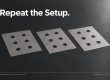
Stainless steel etching is a precision, subtractive manufacturing process used to produce thin metal parts with fine holes, slots, meshes, apertures, spring features, and complex profiles without stamping burrs or mechanical cutting stress. For engineered parts, the most relevant method is photochemical etching: artwork is transferred to a photoresist-coated sheet and the exposed metal is selectively removed.
For grades such as 301, 304, 316, 17-7 PH and 1.4310, etching is especially useful when part geometry is complex, tooling changes are frequent, or low-to-medium production volumes make hard tooling unattractive. Achievable tolerances and minimum feature sizes depend on material, thickness, geometry and inspection requirements, so critical dimensions should be reviewed from the drawing rather than specified from a single generic rule.
This guide focuses on the manufacturing process, material selection, design limits, quality control and applications of stainless steel etching. For chemistry and etchant-selection considerations, see our dedicated guide to stainless steel etching solutions.
Understanding Stainless Steel
Composition and Properties of Stainless Steel
Iron makes up most of stainless steel, with a minimum of 10.5% mass percentage of chromium and other metals, including nickel, manganese, and molybdenum. Stainless steel gains exceptional corrosion resistance, strength, durability, and aesthetic appeal from this composition.
Common Grades and Their Applications
Common grades of stainless steel are ferritic stainless steel ( 430) , marine grade stainless steel ( 316), and 304 (18-8). Because of its unique qualities, each grade can be used in various ways. For example, 316 stainless steel is utilized in marine and medical applications because of its superior corrosion resistance and biocompatibility. Conversely, 304 stainless steel is chosen for food processing equipment and architectural applications.
Significance of Corrosion Resistance and Durability
Stainless steel is highly durable and resistant to corrosion. Because of its ability to withstand rust, tarnish, and corrosion, it is perfect for applications exposed to dampness, chemicals, or severe conditions. Moreover, stainless steel is an affordable option for industrial and consumer items due to its durability, guarantees long-term Performance, and little maintenance.
The Fundamentals of Stainless-Steel Etching
Definition and Purpose
Using a subtractive manufacturing technique called stainless steel etching, complex patterns, designs, or identifications can be made on stainless steel components by carefully removing material from their surface. This procedure uses chemical or electrochemical reactions to dissolve the exposed stainless steel sections and preserve the intended pattern or design. Stainless steel etching is primarily used to etch precise and complex details onto metal surfaces that are difficult or impossible to accomplish with conventional machining techniques.
Advantages Over Traditional Manufacturing Methods
Etching stainless steel has benefits over conventional manufacturing processes like stamping or machining. First, it is ideal for creating complex patterns, logos, or text on stainless steel surfaces due to its exceptional precision and refined detail capabilities. Furthermore, because stainless steel etching is a non-contact process, the material is not subjected to mechanical stress or distortion, guaranteeing consistency and accuracy in dimensions.
Furthermore, this procedure is adaptable and may be used on various stainless-steel grades, including those with tiny sections or complex geometries. Furthermore, because stainless steel etching eliminates the requirement for pricey tooling and setup fees related to standard machining procedures, it is an affordable choice for low to medium-volume production runs.
Applications Across Industries
Because of its accuracy and adaptability, stainless steel etching is used in various industries. It is utilized in the aerospace sector to make complex components with part codes or serial numbers, control panels, and identification plates. Stainless steel etching is used in the medical industry to create surgical tools, implants, and other medical devices that must meet strict biocompatibility standards. Furthermore, circuit boards, connections, and microelectronic components with exact patterns and traces are made using it in electronics. Moreover, the car industry uses stainless steel etching to create nameplates, badges, and decorative trim with elaborate patterns and logos.
Techniques of Stainless-Steel Etching
Chemical Etching

Methods and Uses To create the desired pattern or design, chemical etching entails submerging the stainless-steel substrate in an etchant solution that dissolves the exposed regions alone. The first step in the process is to prepare the stainless steel’s surface. Next, the parts that need to be protected are covered with a resistant mask or pattern.
After that, the masked stainless steel is submerged in the etchant solution, eliminating the exposed metal alone and leaving the desired design in place. Chemical etching may produce fine details on the surface of stainless-steel components with great precision. It is used in making parts like circuit boards, identification plates, surgical tools, and decorative trim in various industries, including electronics, aerospace, medical devices, and automotive.
Electrochemical Etching

Electrochemical etching removes material by combining an electrolyte with controlled electrical current. It is commonly used for marking, localized removal, and selected surface-processing applications rather than for producing the full geometry of thin precision parts.
Compared with photochemical machining, electrochemical methods are better suited to localized features or marks, while photochemical etching is usually the stronger choice when a sheet component requires many through-features, repeated apertures, or a complex external profile. Process selection should therefore follow the drawing, required depth, feature density, and production volume.
Photochemical Etching

Method and Benefits In photochemical etching, a photosensitive resist layer is put to the stainless steel surface, and a pattern is transferred onto it. The exposed portions are then etched using chemical or electrochemical methods. Applying a photosensitive resist layer and prepping the stainless-steel surface are the first steps in the process. Then, using photolithography processes, the desired design is put onto the resist layer.
When UV light strikes the stainless steel that has been masked, the resist hardens in the places that aren’t covered by the pattern. After removing the exposed resist, the exposed portions are etched out of the stainless-steel substrate. Because photochemical etching has excellent repeatability, scalability, and precision, it can produce intricately designed components in large quantities, including decorative items, microelectronics, and aerospace components.
Material Selection
Selecting the Proper Grade of Stainless Steel The success of the etching process depends on choosing the right quality of stainless steel. The machinability, etch ability, and corrosion resistance levels differ throughout grades. When selecting the stainless-steel grade, the intended application, the surrounding environment, and the desired appearance should be considered. Grades with higher chromium and nickel content, such as 304 and 316, are recommended for applications needing exceptional corrosion resistance. However, ferritic stainless steels, like 430, may be more appropriate for decorative applications due to their cheaper cost and good formability.
Design Complexity
Customizing Etching Methods to Specific Design Needs The process parameters and selection of the etching technique are influenced by the intricacy of the design. To attain the intended outcomes, intricate designs with fine details need higher-resolution masks and exact control over etching conditions. In addition, the design specifications should be considered while selecting an etching technique, such as chemical, electrochemical, or photochemical, considering aspects like feature size, aspect ratio, and surface polish.
Environmental and Safety Considerations
Safely Managing Etchants When handling etchants, safety precautions must be taken to safeguard people and the environment. Etchant solutions must be addressed, stored, and disposed of properly because they might be poisonous, caustic, or environmentally dangerous. There should be enough ventilation, personal protective equipment (PPE), and spill containment systems to reduce dangers. Moreover, the environmental effect of the etching process can be decreased by using eco-friendly etching techniques such as closed-loop recycling systems or water-based etchants.
Quality Control and Inspection
Dimensional Accuracy
Verifying That Etched Features Fulfill Requirements To guarantee that the etched features in stainless steel satisfy the required dimensions and tolerances, dimensional accuracy is essential. This includes checking that the etched features’ size, shape, and location correspond to the design parameters using precise measuring instruments like calipers, micrometers, or optical comparators.
Surface Finish
Verifying That Etched Features Fulfill Requirements To guarantee that the etched features in stainless steel satisfy the required dimensions and tolerances, dimensional accuracy is essential. This includes checking that the etched features’ size, shape, and location correspond to the design parameters using precise measuring instruments like calipers, micrometers, or optical comparators.
Adhesion and Durability Testing
Assessing Performance, the strength of the link between the etched pattern and the stainless-steel substrate, and the resistance to mechanical, chemical, and environmental conditions are evaluated by adhesion and durability tests. Assessing long-term Performance and dependability may entail conducting adhesion tests, such as tape pull or scratch tests, and accelerating aging or corrosion testing on the etched components.
Design Checklist for Stainless Steel Etched Parts
- Specify the stainless steel grade and material condition.
- State sheet thickness and identify truly critical dimensions.
- Flag holes, slots, webs, half-etched areas, and datum features.
- Separate functional tolerances from cosmetic dimensions.
- Confirm whether flatness, surface finish, passivation, or plating is required after etching.
- Provide expected prototype and production quantities so the manufacturing route can be reviewed properly.
Frequently Asked Questions
Is stainless steel etching suitable for 304 and 316?
Yes. Both 304 and 316 are commonly processed by photochemical etching. Final capability depends on thickness, geometry, tolerance and downstream requirements.
Does photochemical etching leave stamping burrs?
No conventional punch-and-die burr is created because the profile is formed chemically rather than by shearing. Edge profile still depends on material thickness and etch geometry.
When should stamping be used instead?
Stamping can be the better choice for very high production volumes when geometry is stable and the cost of hard tooling can be amortized. Etching is often more attractive for complex thin parts, prototypes, frequent revisions, or dense feature patterns.
Conclusion
Stainless steel etching is most valuable when a thin metal component combines complex geometry, multiple fine features, low mechanical stress and the need for rapid design changes. The process should be selected from the drawing rather than from a generic tolerance claim.
For a manufacturability review, send Xinketching the drawing with material grade, thickness, critical tolerances and quantity. We can review whether photochemical etching is appropriate and identify dimensions that may need adjustment before quotation.

- Etching Titanium: When the Weight or the Chemistry Earns It - October 24, 2026
- Etching Copper and Brass: What Changes vs Stainless Steel - October 23, 2026
- Etching Stainless Steel: 304 vs 316L vs 301 for Etched Parts - October 22, 2026