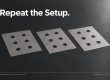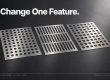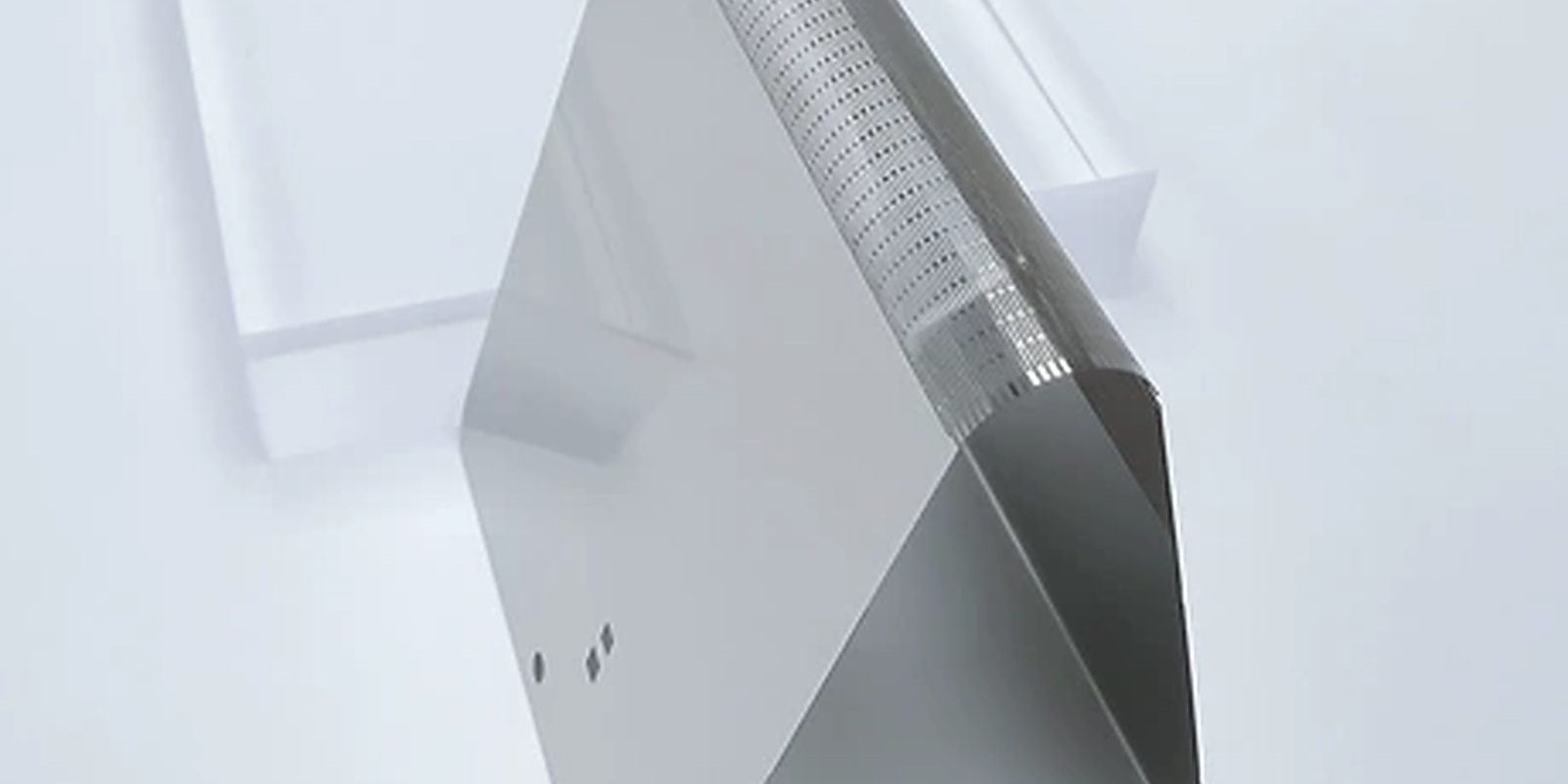
A foldable-display support plate should be reviewed as a complete pattern, not as a list of isolated dimensions. For photo etching, the most important inputs are material grade, thickness, minimum opening, pitch, web width, critical tolerance, half-etched features, flatness and downstream assembly requirements.

Why support-plate DFM is different from a normal flat washer or shim
A foldable display support plate may need to do two jobs at once: provide stable support when the device is open and still allow repeated bending in a localized folding zone. Samsung’s 2026 Flex Titanium announcement is a useful public example: the company described a titanium plate with sophisticated micro-patterned holes in the folding section to combine flexibility with durability. That design concept makes the relationship between hole geometry, remaining metal and material thickness especially important.
Apple’s iPhone Duo also uses a titanium plate beneath the folding display. Apple does not disclose the manufacturing method for that plate, but the architecture reinforces the broader trend toward thin structural metal layers beneath foldable displays.
DFM checklist: what to put on the drawing
| Item | What the engineer should define | Why it matters for etching |
|---|---|---|
| Material | Exact titanium or stainless-steel grade | Different alloys use different chemistry and process compensation |
| Thickness | Nominal thickness and allowable variation | Feature size and tolerance capability scale with thickness |
| Minimum hole / slot | Smallest finished opening | Very small openings are affected by lateral etching |
| Pitch | Center-to-center spacing in repeated patterns | Pitch controls repeatability and remaining web strength |
| Minimum web | Narrowest metal bridge between features | The web can be more limiting than the hole itself |
| Critical tolerance | Identify only function-critical dimensions | Blanket tight tolerances can add cost without improving function |
| Half-etched features | Recesses, marks or controlled-depth areas | Depth and registration need dedicated review |
| Flatness | Assembly-level flatness requirement | Thin patterned sheets can be sensitive to handling and residual stress |
| Post-processing | Forming, cleaning, plating, passivation or bonding requirements | Downstream steps can change the manufacturing route |
Start with thickness before debating tolerance
For chemical etching, thickness is one of the strongest predictors of practical feature capability. A useful first-pass rule at XINKETCHING is to avoid assuming that a finished hole or slot can be substantially smaller than the sheet thickness without a specific DFM review. Finer features may be possible, but they should be treated as engineering exceptions rather than default capability.
The same logic applies to tolerance. A drawing with a few truly critical dimensions is easier to optimize than a drawing that applies the same tight tolerance to every hole and outer edge.
Micro-hole patterns: review the whole folding zone
A repeated-hole array should be reviewed as a system. The engineer should provide the opening shape, pitch, web width, pattern boundary, orientation to the fold line and any zones where the pattern changes density. For a flex-support structure, the remaining metal between holes can be just as important as the holes themselves.
For a dedicated discussion of opening size and pitch, see the foldable-phone metal mesh and perforated-plate guide.
Through etching vs half etching
Most perforated support structures rely mainly on through features, but half etching can be useful for identification, local recesses or controlled relief features. Half-etched regions require more process planning because depth, edge shape and double-sided registration matter. Do not specify a half-etched depth without also defining what function the recess serves.
Flatness belongs on the assembly drawing
A thin etched plate can meet XY dimensions and still create assembly issues if flatness is ignored. If the plate will be bonded beneath an OLED stack, laminated to another layer or used as a support surface, define the flatness requirement at the functional area rather than as a vague cosmetic note.
Include the measurement support condition and the acceptance stage: before forming, after cleaning or after bonding. Use the first-sample inspection checklist to agree how the drawing requirements will be verified.
When photo etching may not be the right process
- Thick 3D load-bearing hinge bodies.
- Deep pockets or strongly three-dimensional geometry.
- Features whose tolerance is far tighter than the thickness-based etching process window.
- Simple geometry at extreme volumes where dedicated stamping tooling is economically superior.
If the design falls into one of these categories, XINKETCHING can still help identify whether laser cutting, stamping, CNC machining or another process should be considered instead.
Frequently asked questions
What is the first file I should send for DFM?
A dimensioned PDF plus DXF or DWG is usually enough for an initial review. STEP can also be useful when the etched part interacts with a larger assembly.
Should I specify every hole individually?
Not necessarily. For repeated patterns, define the hole geometry, pitch, pattern boundary and critical positional references clearly. This is often easier to manufacture and inspect than dimensioning every feature independently.
Can XINKETCHING review both titanium and stainless steel?
Yes. If the material is not locked, the same geometry can be reviewed in both materials. See the titanium vs stainless steel comparison.
Send the drawing for an engineering review
For a useful answer, send the material candidate, thickness, smallest opening, pitch, critical tolerances and quantity. XINKETCHING will review whether photo etching is suitable before quoting the part.
For the complete foldable-electronics capability overview, visit Foldable Phone Metal Etching.
Industry references
Brand references are used only to illustrate publicly disclosed engineering trends. XINKETCHING does not claim to manufacture these branded components.

- Etching Titanium: When the Weight or the Chemistry Earns It - October 24, 2026
- Etching Copper and Brass: What Changes vs Stainless Steel - October 23, 2026
- Etching Stainless Steel: 304 vs 316L vs 301 for Etched Parts - October 22, 2026