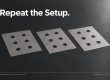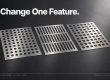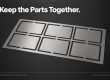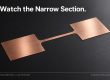
There is no single manufacturing process for all metal parts inside a foldable smartphone. Thin, flat parts with dense holes, slots or complex profiles may suit photochemical etching. Laser cutting is useful for flexible digital cutting. Stamping is strong for very high-volume stable geometries. CNC machining and additive manufacturing are better for many thick, three-dimensional or load-bearing hinge parts.

Why foldable phones use multiple manufacturing processes
A foldable phone combines display support, hinge mechanics, shielding, thermal management, antenna structures, brackets, spacers and spring/contact components in a very small package. These parts do not share the same geometry or loading conditions, so treating “foldable-phone metal parts” as one sourcing category is a mistake.
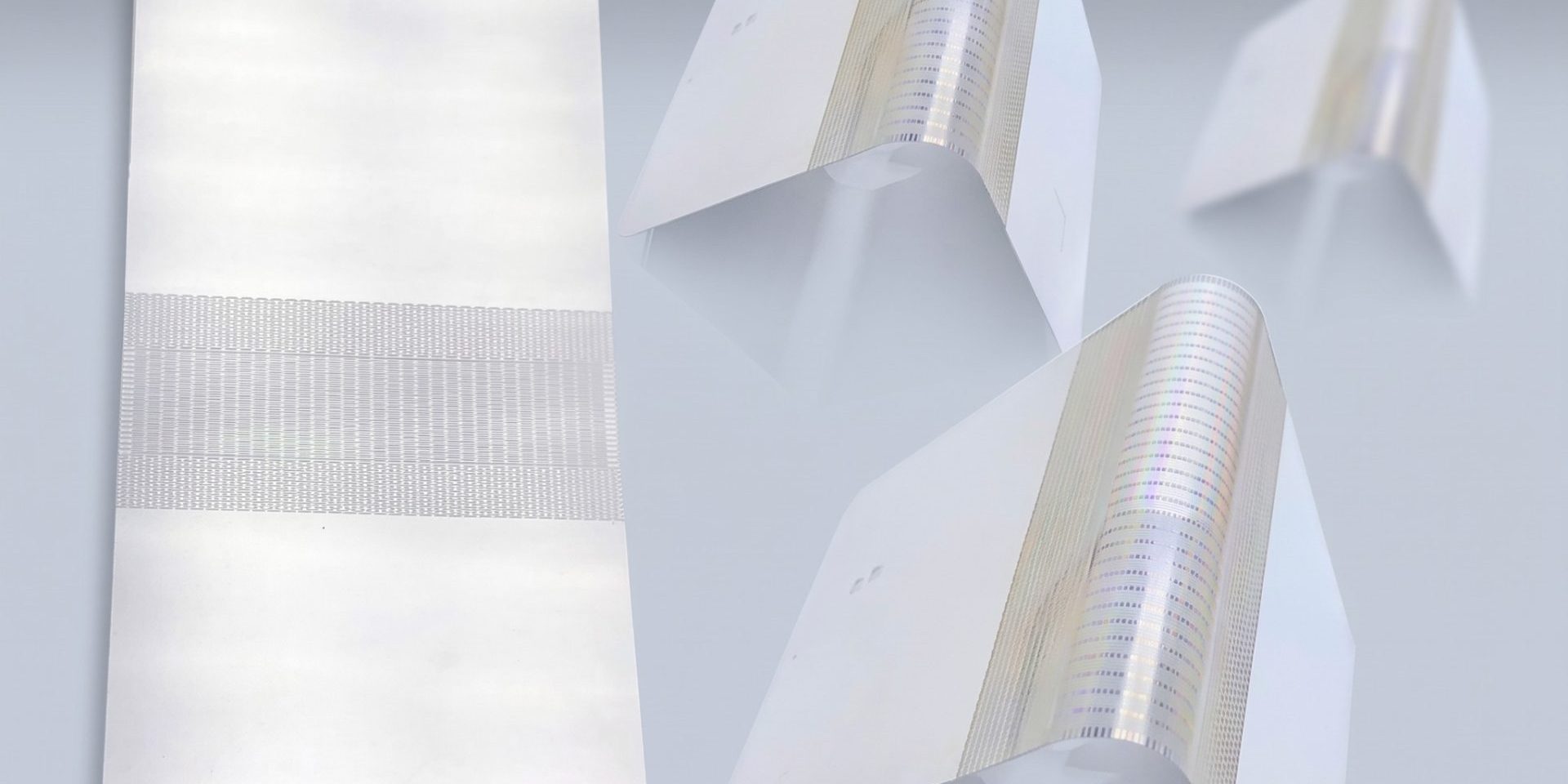
Public 2026 product announcements show this clearly. Samsung describes a titanium plate beneath its next-generation foldable display with micro-patterned holes in the folding section. Apple states that iPhone Duo uses Grade 5 titanium, a titanium plate beneath the inner display, a custom vapor chamber and a 3D-printed hinge cover. OPPO states that the Find N6 hinge casing and wing plates use Grade 5 titanium produced with 3D printing. The correct manufacturing method therefore depends on the specific part family, not simply on whether the device is foldable.
Process map for common foldable-phone metal components
| Part type | Typical geometry | Processes to evaluate |
|---|---|---|
| Display support plate | Thin sheet, repeated holes, flexible zone | Photo etching, laser, stamping depending on design and volume |
| Precision mesh / perforated plate | Hundreds or thousands of small openings | Photo etching is often highly efficient |
| Shim / spacer | Thin, flat outline | Photo etching, stamping, laser |
| EMI shield / grounding part | Thin sheet with apertures and tabs | Photo etching, stamping plus forming |
| Spring/contact part | Thin alloy, precise profile, possible forming | Photo etching + forming or stamping |
| Thick hinge body | 3D load-bearing geometry | CNC, MIM, forging or additive manufacturing |
| Complex titanium hinge casing | Deep 3D shape | Additive manufacturing can be appropriate |
When photochemical etching is the strongest candidate
Photo etching is especially valuable when the part starts as thin metal sheet or foil and contains many features that would otherwise require repeated cutting operations or expensive hard tooling.
- Dense micro-hole or slot patterns.
- Complex flat outer profiles.
- Burr-sensitive interfaces.
- Parts where thermal cutting effects are undesirable.
- Prototype designs that may still change.
- Multiple part geometries nested on the same sheet.
The method is not limited to titanium. Stainless steel, nickel, copper and other engineering metals may also fit depending on the component function.
When laser cutting makes more sense
Laser cutting is also a digital process with low tooling cost. It can be a strong option when the part is relatively simple, the number of small openings is limited, the material is thicker, or the required geometry falls outside the preferred chemical-etching process window. For detailed process selection, see photo etching vs laser cutting for foldable-phone titanium support plates.
When stamping becomes the economic winner
Stamping becomes attractive after the geometry is stable and production volume is high enough to justify hard tooling. For a simple part repeated in very large quantities, a proven die can provide fast cycle time and low unit cost. The trade-off is that design changes can require die rework or new tooling.
For early foldable-device development, this is why engineers often evaluate digital or photochemical processes before freezing a design for hard tooling.
Why CNC and 3D printing belong to a different part family
Photochemical etching removes material through the thickness of flat sheet. It is not a replacement for a 3D machining or additive process when the part requires deep channels, thick load-bearing sections, bosses, complex hinge surfaces or a fully three-dimensional body.
OPPO’s public description of the Find N6 is a useful example: the Grade 5 titanium hinge casing and wing plates are produced with 3D printing. Apple likewise describes a 3D-printed hinge cover on iPhone Duo. Those components should not be used as evidence that every titanium part in a foldable device should be etched.
A better sourcing method: divide the BOM into process families
- Thin flat precision parts: send these for photo-etching / laser / stamping review.
- Formed sheet parts: evaluate etching or stamping together with secondary forming.
- Thick machined parts: route to CNC, MIM, forging or other structural processes.
- Complex 3D titanium parts: consider machining or additive manufacturing.
- Thermal components: evaluate the specific heat-transfer architecture separately.
This avoids forcing every component into one supplier’s preferred process and makes DFM discussions more objective.
Where XINKETCHING fits in a foldable-phone supply chain
XINKETCHING’s role is primarily the thin, flat precision-metal side of the BOM: support plates, perforated structures, precision meshes, shims, spacers, EMI/grounding components, spring/contact blanks and other sheet-metal geometries that fit photochemical machining.
For support-plate design details, use the Foldable Display Support Plate DFM Checklist. For the full capability overview, see Foldable Phone Metal Etching.
Frequently asked questions
Can one factory make every metal part inside a foldable phone?
It is possible for a large manufacturing group to manage several processes, but it is usually more useful to select each process according to the part geometry and function. Thin etched parts and thick 3D hinge structures have very different manufacturing requirements.
Is photo etching only for prototypes?
No. Photo etching is used for both prototypes and production. Its low-cost digital phototooling makes iteration easy, while sheet processing allows many identical parts to be produced at once.
Does a titanium part automatically require photo etching?
No. Material alone does not determine the process. A flat titanium plate with dense holes may suit etching, while a thick three-dimensional titanium hinge component may be better machined or additively manufactured.
Send only the parts that fit the process
If you have a foldable-device BOM, send the thin flat metal drawings separately. XINKETCHING can identify which parts are realistic candidates for photochemical etching and which should remain with another manufacturing process.
Industry references
- Samsung: Flex Titanium display structure
- Apple: iPhone Duo materials and display construction
- OPPO Global — Grade 5 titanium hinge casing and wing plates produced by 3D printing
Brand references describe publicly disclosed engineering examples only and do not imply a supplier relationship with XINKETCHING.

- What Can a Pilot Lot Actually Prove About Etched-Part Repeatability? - October 9, 2026
- How Much Open Area Remains After an Acoustic Mesh Is Assembled? - October 8, 2026
- How Do You Compare Etched Prototypes Without Losing Track of the Design? - October 7, 2026