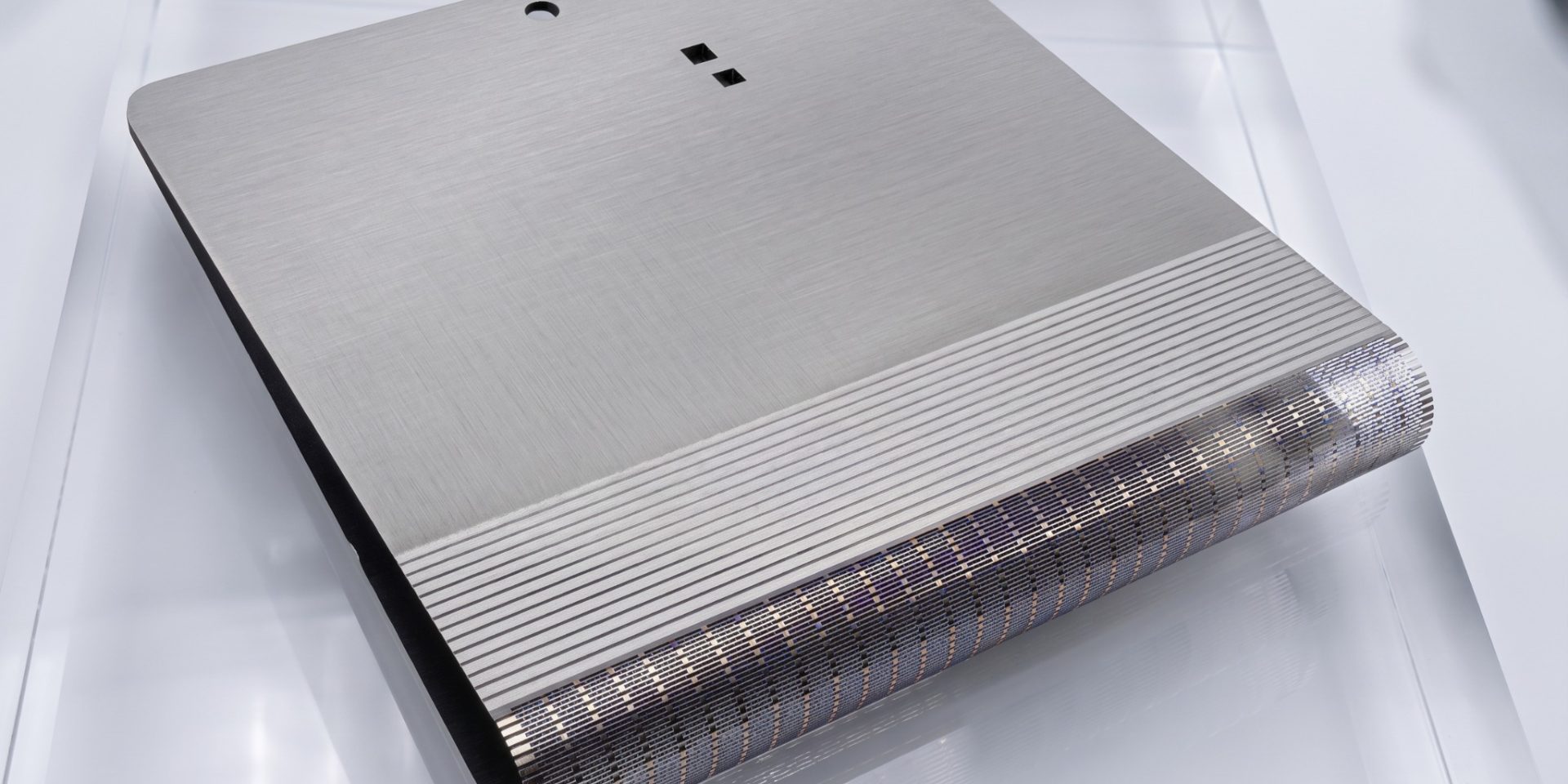
Grade 5 titanium (Ti-6Al-4V) can be evaluated for photochemical etching, but it should not be treated like stainless steel. Titanium’s passive oxide layer and alloy chemistry require dedicated process control, and the part geometry must be reviewed against material thickness before tolerance is promised.

Why Grade 5 titanium is relevant to foldable devices
Grade 5 titanium has become highly visible in premium foldable hardware because it offers an attractive strength-to-weight ratio. Apple states that its 2026 iPhone Duo is crafted from Grade 5 titanium. OPPO also states that the Find N6 hinge casing and wing plates use Grade 5 titanium alloy, although OPPO produces those 3D hinge structures using additive manufacturing rather than photo etching.
These public examples do not imply that every Grade 5 titanium part should be etched. They show why engineers increasingly need to choose the correct manufacturing process for titanium components with very different geometries.
Good candidates for Grade 5 titanium photo etching
- Thin, primarily flat support plates.
- Perforated plates with many holes or slots.
- Shims, spacers and thin reinforcement parts.
- Precision screens and selected mesh geometries.
- Flat components that may later receive secondary forming.
Poor candidates
- Thick 3D hinge bodies.
- Deep pockets or ribs.
- Parts whose critical geometry is mainly through the Z axis.
- Components requiring a machined bearing surface or precision cylindrical bore.
Grade 5 titanium DFM checklist
| Check | Engineering question |
|---|---|
| Thickness | Is the sheet thickness appropriate for the minimum hole, slot and web? |
| Minimum opening | Is the smallest feature at least near the sheet thickness, or does it need a specific fine-feature trial? |
| Tolerance | Which dimensions are truly functional? Avoid applying the tightest tolerance to every noncritical feature. |
| Pitch / web | Will the remaining ligament survive etching, handling and downstream assembly? |
| Surface | Does the part need a specific bonding, passivation, cleaning or cosmetic condition? |
| Forming | Is the part flat after etching or formed later? Forming can change tolerance and flatness strategy. |
Why titanium needs its own process review
Titanium develops a stable oxide film that makes it corrosion resistant but also changes how chemical removal must be controlled. Etchant selection, bath condition, agitation, exposure and masking all affect the result. That is why a stainless-steel tolerance table should not be copied directly onto a titanium project.
XINKETCHING’s broader titanium chemical etching guide explains the material-specific process considerations.
What tolerance should an engineer expect?
Request a drawing-specific tolerance proposal for the exact alloy, thickness and critical features. Confirm the measurement face, inspection method and sampling locations before approving a sample. A general precision figure is not evidence of capability on your titanium part.
Best way to quote a foldable-electronics titanium part
Send DXF/DWG plus a dimensioned PDF, identify Grade 5 / Ti-6Al-4V explicitly, state thickness and annual volume, then mark only the dimensions that control function. This gives the process engineer enough information to decide whether photochemical etching, laser, stamping or machining is the better route.
For the full application overview, see XINKETCHING’s foldable phone metal etching guide. For a DFM review, email sales@xinketching.com.

- Etching Copper and Brass: What Changes vs Stainless Steel - October 23, 2026
- Etching Stainless Steel: 304 vs 316L vs 301 for Etched Parts - October 22, 2026
- What Can a Pilot Lot Actually Prove About Etched-Part Repeatability? - October 9, 2026