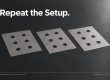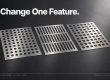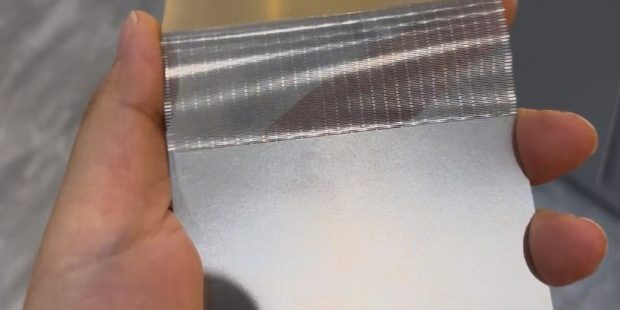
Do not choose a foldable-phone metal etching supplier from a generic “±0.01 mm precision” claim or a list of machines. The supplier should be able to review the actual drawing, explain which dimensions are realistic for the chosen material thickness, identify where etching is not the right process, and document inspection requirements before production.

1. Start with process fit, not factory size
A supplier should first decide whether the part belongs in photochemical etching at all. Thin support plates, dense perforated structures, precision mesh, shims, spacers and flat EMI parts can be strong candidates. Thick 3D hinge bodies, bearing features or deep structural forms usually need another manufacturing process.
A supplier that says “yes” to every drawing is not providing DFM.
2. Ask for material-specific capability
Foldable devices increasingly use titanium because of its strength-to-weight ratio. That does not mean a stainless-steel etching line can simply run titanium with the same process window. Ask the supplier to confirm:
- Exact titanium grade supported, including Grade 5 / Ti-6Al-4V if required.
- Available sheet thickness.
- Minimum recommended hole / slot and minimum web for that thickness.
- Expected tolerance on the actual drawing.
- Surface condition after etching and any required post-treatment.
3. Require a drawing-level tolerance review
Photochemical etching is an isotropic material-removal process. As sheet thickness increases, lateral undercut becomes more important. This is why a realistic supplier should tie tolerance and minimum feature recommendations to material thickness rather than advertise one universal number.
Request a drawing-specific tolerance proposal for the exact alloy, thickness and critical features. Confirm the measurement face, inspection method and sampling locations before approving a sample. A general precision figure is not evidence of capability on your titanium part.
4. Check whether the supplier understands dense perforation patterns
Samsung’s 2026 Flex Titanium announcement describes a titanium plate beneath the foldable display with micro-patterned holes in the folding section. Samsung does not disclose the supplier or manufacturing process, but the public structure illustrates the type of DFM problem engineers may bring to an etching manufacturer: many repeated openings, small webs and a structural requirement for controlled flexibility.
Source: Samsung: Flex Titanium display structure. This describes a product architecture, not a disclosed photo-etching route or a XINKETCHING supply relationship.
5. Ask how prototypes transition to production
| Stage | What a capable supplier should provide |
|---|---|
| RFQ / DFM | Review material, thickness, hole/slot size, tolerance and post-process requirements. |
| Prototype | Fast phototool revision, first-article inspection and clear feedback on dimensions that need adjustment. |
| Pilot lot | Repeatability checks, inspection plan and packaging method. |
| Production | Controlled work instructions, lot traceability, in-process inspection and final inspection. |
6. Protect the drawing and project information
Consumer-electronics projects often require confidentiality before a supplier sees the complete design. Ask whether the supplier can sign an NDA before receiving the drawing and how engineering files are controlled internally.
7. Verify what is actually made in-house
Ask which steps are performed internally: photoresist lamination, exposure, developing, chemical etching, stripping, dimensional inspection, forming and finishing. Outsourcing is not automatically a problem, but the supplier should be transparent about who controls each critical operation.
8. Look for a supplier willing to reject the wrong process
This is one of the best procurement tests. OPPO publicly states that Grade 5 titanium hinge casing and wing plates in the Find N6 are produced with a 3D printing process. A competent photo-etching supplier should recognize that thick 3D structural hinge parts are outside the normal strength of photochemical machining and should recommend a different route when appropriate.
Source: OPPO: Find N6 hinge materials and manufacturing.
Questions to include in your RFQ
- Can you etch this exact material grade and thickness?
- Which dimensions on the drawing are outside your normal process window?
- What minimum hole / slot and web do you recommend?
- Which tolerances should be relaxed if they are not function-critical?
- What inspection method will be used for the dense pattern?
- Can you provide prototype and pilot-lot lead times?
- Can you sign our NDA before receiving full CAD data?
Where XINKETCHING fits
For a XINKETCHING quotation, provide the exact alloy, thickness, overall dimensions and minimum openings. Ask for written confirmation of feasible sheet size, feature tolerances and any secondary operations. Capability on another material or part is not a production guarantee for your drawing.
Start with the foldable phone metal etching manufacturer guide. If you already have a drawing, send it to sales@xinketching.com for a DFM review.
Brand references in this article are used only to discuss publicly announced engineering trends. XINKETCHING does not claim to supply Apple, Samsung or OPPO unless a customer-approved case study explicitly states otherwise.

- Etching Stainless Steel: 304 vs 316L vs 301 for Etched Parts - October 22, 2026
- What Can a Pilot Lot Actually Prove About Etched-Part Repeatability? - October 9, 2026
- How Much Open Area Remains After an Acoustic Mesh Is Assembled? - October 8, 2026