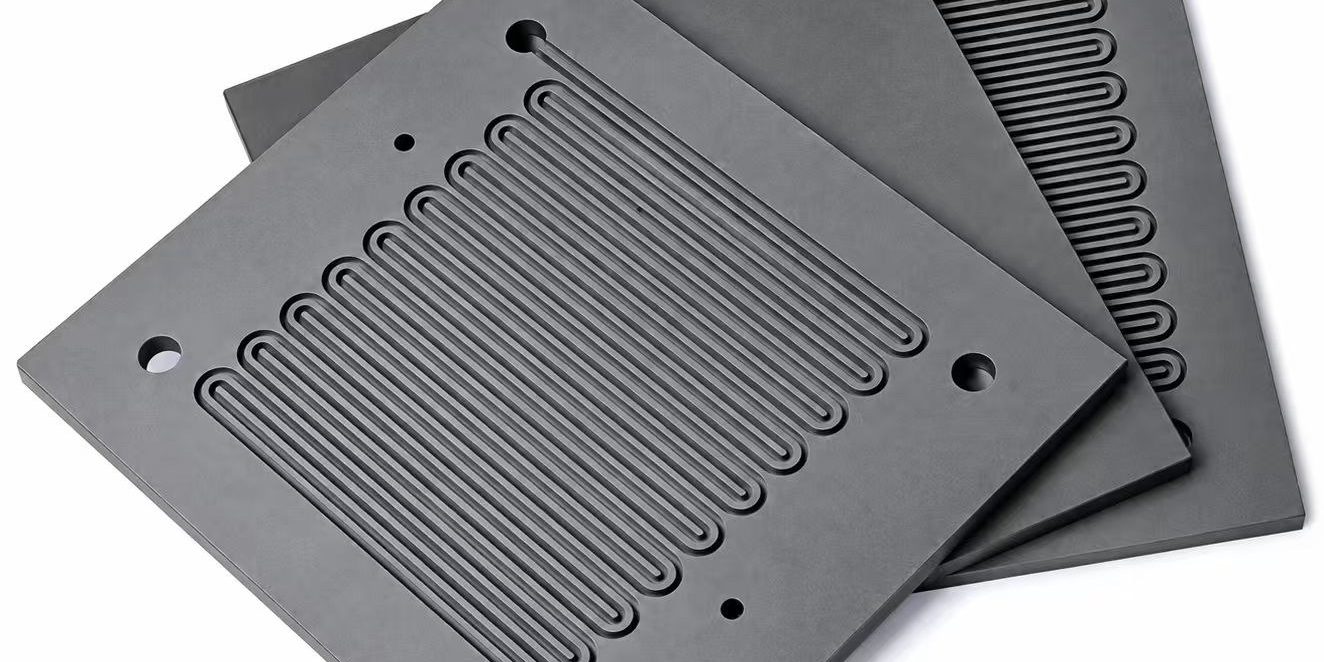
Most etched-part drawings that just say “stainless steel” are underspecified. Three austenitic grades cover nearly every etched stainless part — 301, 304 and 316 — and they behave differently where it matters: spring force, corrosion in chloride environments, formability and cost. Xinketching is a precision photochemical etching manufacturer in Dongguan, China, producing flat etched metal parts since 2005. This guide compares the three grades the way an etched-part buyer actually chooses between them, and names the four mistakes that waste money or break a design.
Answer capsule: which grade, in one line each
- 304 — the default. Balanced corrosion resistance, formability and weldability, and the lowest cost of the three. If no other requirement pushes you away from it, 304 is the grade.
- 301 — the spring grade. It work-hardens fast under cold work, so tempered 301 is the choice for spring contacts, clips and retaining rings that must hold force. Its temper must be specified, not assumed.
- 316 / 316L — the corrosive-environment grade. Molybdenum gives it markedly better resistance to chloride pitting and crevice corrosion than 304, at a premium price. Choose it for marine, chemical-process and food-process exposure, not by habit.
- All three etch. Grade choice is driven by mechanical and corrosion requirements, not by etchability — the photochemical etching process, the tolerance and the feature floor are the same for all three.
Specifications
- Materials: stainless steel (grades 301, 304, 316/316L), copper, brass, nickel, titanium — we do not etch aluminium
- Thickness range: 0.05–2.5 mm — gauges 0.05, 0.08, 0.1, 0.12, 0.15, 0.2, 0.25, 0.3, 0.4 and 0.5 mm are stocked; above 0.5 mm up to 2.5 mm is sourced per order
- Dimensional tolerance: ±10% of material thickness (e.g. ±0.02 mm on 0.2 mm stock, ±0.05 mm on 0.5 mm stock); raw-stock thickness tolerance ±0.02 mm
- Minimum through-features: ≈ material thickness (design rule ≈ 0.8–1.2× thickness)
- Half-etched features: fold lines, recesses and marks at ≈50–75% of thickness, depth control ±0.05 mm
- Finishing: passivation in-house; all plating types available via qualified partners
- Format: flat sheets only, no coil/reel-to-reel; maximum single sheet 600 × 1,450 mm for material 0.5 mm and above
- Lead times and order terms: samples 3–5 days, production 7–10 days; no minimum order quantity, minimum order charge US$100; FOB
- Quality documents: material test certificate with per-run material batch traceability; PPAP Level 3 supported; IMDS data available; NDAs on request
The three grades, one by one
304 (nominally 18% chromium, 8% nickel) is the general-purpose austenitic grade and the right default for most etched parts: brackets, meshes, shims, encoder discs and filter discs where the environment is ordinary indoor or industrial air, water or mild chemistry. It forms well, welds well and holds its corrosion resistance after etching and passivation. Its weakness is specific, not general: in chloride-bearing environments — coastal air, de-icing salt, process chemicals — 304 can pit, and that is the one case that justifies stepping up.
301 (nominally 17% chromium, 7% nickel) is the grade you choose for force. Its low nickel content makes it work-harden rapidly under cold rolling, so it is supplied in tempers — annealed, 1/4-hard, 1/2-hard, full-hard — and the temper is the property: a spring contact etched from annealed 301 will not spring, while the same artwork in 1/2-hard or full-hard stock will. That is why temper must appear on the drawing next to the grade; “301” alone does not define the part. Two consequences follow. First, forming needs a springback allowance, because hardened 301 springs back more than 304. Second, cold-worked 301 becomes slightly magnetic, which matters if the part sits near a sensor or inside a shielding-sensitive assembly — flag it on the drawing rather than discovering it at test.
316 (nominally 16% chromium, 10% nickel, 2–3% molybdenum) is 304 with molybdenum added, and the molybdenum is the whole story: it stabilises the passive layer against chloride pitting and crevice corrosion, which is why 316 is the grade for marine hardware, chemical-process filters and food-process parts that see washdown chemistry. 316L is the low-carbon variant, chosen when the part will be welded — the lower carbon avoids carbide precipitation at the weld. For a flat etched part with no welding, 316 and 316L behave the same, but specify which one so the material certificate matches the drawing. The cost side is real: the molybdenum and extra nickel make 316 a premium over 304, so specifying it where 304 would survive is money spent on nothing.
The decision at a glance
- Corrosion, general environments: all three are good; 304 is enough.
- Corrosion, chloride or marine exposure: 316/316L, clearly ahead of 304 and 301.
- Spring force and fatigue: 301 in a specified temper, ahead of both.
- Formability and deep forming: 304 first; 301 needs springback allowance and temper control.
- Weldability: 304 and 316L weld well; 301 welds but loses its temper at the weld.
- Magnetism: annealed 304 and 316 are essentially non-magnetic; cold-worked 301 is slightly magnetic — check before placing it near sensors.
- Cost: 304 is the baseline; 301 sits near 304 unless a specific temper is specified; 316 carries a premium for its molybdenum content.
Etching notes that apply to all three grades
Grade does not change the etching rules. The minimum through-feature is still ≈ material thickness, the tolerance is still ±10% of thickness, and the half-etch depth is still 50–75% of thickness with ±0.05 mm control — see our post on photo etching tolerances (/photo-etching-tolerances-10-percent-of-material-thickness/) for the full picture. What grade does change is the finishing step: passivation after etching restores the chromium oxide layer that etching disturbs, and that step is what keeps a 316 part’s chloride advantage real rather than theoretical — it is done in-house on every stainless part. One drawing discipline covers all three grades: write grade, temper (for 301) and thickness on the print. “Stainless steel” alone is not a specification, and a supplier who accepts it will pick the cheapest grade, not the right one.
Four mistakes we see on grade selection
Paying for 316 where 304 survives. If the part never sees chlorides, the molybdenum premium buys nothing — and on a high-volume shim or mesh it buys nothing thousands of times over.
Drawing 301 for a deep-formed part without springback allowance. The same temper that gives a clip its force will fight the forming tool; allow for it or change grade.
Forgetting temper on a 301 spring part. Annealed 301 etched into a contact finger is a flat piece of metal, not a spring — the temper is the function.
Assuming non-magnetic. Cold-worked 301 near a sensor or inside a shielded assembly can shift a reading; if magnetism matters, say so and we will confirm the temper and test route before production.
FAQ
Can I switch grade after sampling?
Yes — the same digital artwork runs any of the three grades, and samples take 3–5 days. But re-validate the behaviour that drove the grade: spring force for 301, corrosion exposure for 316. A part sampled in 304 and switched to 301 for force is a new part mechanically, even though the outline never changed.
Does grade affect tolerance or minimum feature size?
No. Tolerance is ±10% of material thickness and the minimum through-feature is ≈ material thickness for all three grades. Grade changes mechanical and corrosion behaviour, not etching geometry.
Is 316L the same as 316?
Nearly, for etched flat parts: 316L is the low-carbon variant, and the difference matters at welds. If the part is not welded, either is fine — but put the exact grade on the drawing so the certificate matches.
What do you need to quote a grade-specific part?
The drawing or DXF, the grade (and temper for 301), thickness, quantities for samples and production, and any documentation requirements (PPAP, IMDS). NDAs are signed on request before drawings change hands.
Send us the drawing
Xinketching etches 301, 304 and 316/316L stainless parts from 0.05 to 2.5 mm, with samples in 3–5 days, production in 7–10 days, no minimum order quantity and a US$100 minimum order charge. Send the drawing through our contact page (/contact/) or to sales@xinketching.com, stating the grade, the temper where it matters, and the thickness — and we will confirm the feature floor and the finishing route against your print.

- What Does a 770 W/cm² GPU Hotspot Mean for the Etched Copper Flow Layer? - November 22, 2026
- Photo-Etched Precision Medical Metal Components: Micro-Needles, Lancets and Microfluidic Parts - November 21, 2026
- Custom Lead Frame Etching for IC Packaging: Photo-Etched vs Stamped Lead Frames - November 18, 2026