Two titanium watches reached the market months apart, and together they explain why titanium is now a wearable material rather than a watchmaking curiosity. Samsung announced the Galaxy Watch Ultra2 on July 22, 2026: a 47 mm watch with a Grade 4 titanium frame, sapphire crystal, 10ATM water resistance, IP69K dust and water protection, MIL-STD-810H durability and EN13319 dive certification to 40 metres, at $699.99 in the US. Apple followed on September 9, 2026 with the Apple Watch Ultra 4: a 49 mm titanium case in natural and black titanium, made with 100 percent recycled titanium in what Apple calls a 3D-printed titanium case, on sale from September 18 at $799. Both watches sell titanium as toughness you can wear — light on the wrist, hard to scratch, indifferent to salt water and sweat.
That is the news. The manufacturing question underneath it is narrower, and it is the question this post answers: which titanium watch parts are actually made by photo-chemical etching, and which are not? The short answer is that the case — the part both brands put in the headline — is not etched. The parts that are etched are flat: the dial plate, the decorative inlay, the mesh-pattern panel. A buyer who sends us a watch case drawing will be told no; a buyer who sends us a dial plate drawing will be quoted. The rest of this post is the line between the two, and what the drawing must carry on the etched side of it.
Answer capsule: six things a buyer needs
- We etch titanium watch parts — flat ones. Titanium is one of the five metals we photo-etch — stainless steel, titanium, copper, brass and nickel. We do not etch aluminium.
- The case is not etched. A watch case is a thick-walled, three-dimensional part: machined, forged, or 3D-printed. Etching makes flat sheets into flat parts. Do not send a case drawing expecting an etch quote.
- The etched parts are the dial plate, the decorative inlay and the mesh-pattern panel. Flat, thin, fine-detailed — that is the etching envelope, and a watch dial sits squarely inside it.
- Through-features follow the thickness rule. A hole or slot floors at roughly 0.8–1.2× the material thickness. On 0.1 mm stock that is roughly a 0.08–0.12 mm feature; on 0.2 mm stock, roughly 0.16–0.24 mm. Finer detail needs thinner stock, not a harder etch.
- Decorative relief is a half-etch. Raised or recessed decoration is etched 50–75% of the thickness, depth-controlled to ±0.05 mm. Tolerance on every dimension is ±10% of thickness.
- Flat parts only, to 600 × 1,450 mm. We etch flat sheets; full size only at 0.5 mm and above, thinner gauges run smaller. A part that needs a bend or a formed curve is a formed part: bending/forming is outsourced and must be confirmed at quotation.
Specifications
- Materials: stainless steel, titanium, copper, brass and nickel (we do not etch aluminium)
- Titanium grades etched: commercially pure Grades 1 and 2 and alloy Grade 5 (Ti-6Al-4V). Grade 4 — the grade Samsung uses for the Ultra2 frame — is NOT in our standard etched range; confirm at quotation
- Thickness range: 0.05–2.5 mm — gauges 0.05, 0.08, 0.1, 0.12, 0.15, 0.2, 0.25, 0.3, 0.4 and 0.5 mm stocked; above 0.5 mm up to 2.5 mm sourced per order. Watch dial plates and inlays typically sit at 0.1–0.3 mm
- Maximum flat sheet: 600 × 1,450 mm — full size only at 0.5 mm and above; thinner gauges run smaller
- Tolerance: ±10% of material thickness (on 0.1 mm stock ±0.01 mm; on 0.2 mm stock ±0.02 mm)
- Half-etch (decorative relief, recessed markers): 50–75% of thickness, depth control ±0.05 mm
- Through-features (indices, apertures, mesh openings): ≈ 0.8–1.2× material thickness minimum (0.20 mm hole in 0.3 mm stock declined)
- Form: flat sheets only — no coil, no reel; bending/forming outsourced
- Finish: passivation available in-house; plating and surface treatment outsourced
- Lead time: samples 3–5 days when material is in stock (7–10 days for special material not stocked); production 7–10 days
- Commercial: no MOQ; US$100 minimum order; FOB; material test certificate + per-run batch numbers on every order; PPAP Level 3 documentation available
Why titanium is in watches now
The two launches agree on the reason, and it is not fashion. A sports watch lives in sweat, salt water, dust and knocks — the exact environment where stainless steel is heavy and ordinary coatings fail. Samsung’s Ultra2 carries the numbers for that environment: 10ATM water resistance, IP69K against dust and high-pressure water jets, MIL-STD-810H for shock and environmental stress, and EN13319 certification as a diving instrument to 40 metres. Apple’s Ultra 4 answers the same brief with a 49 mm titanium case and up to 50 hours of battery in a watch that weighs 63.0 g. Titanium’s case for the wrist is density: at ≈ 4.5 g/cm³ against steel at ≈ 7.9 g/cm³, the same part in titanium weighs roughly 57% of the steel part. On a watch that is worn all day, that difference is felt, not calculated.
None of that makes the case an etched part. A 47 mm case is a thick-walled shell with a crown tube, pushers, a crystal seat and a caseback thread — geometry that is machined or forged, and in Apple’s case 3D-printed. Etching removes metal from a flat sheet through a photographic mask; it cannot build a wall, a thread or a lug. The honest division of labour in a titanium watch is therefore simple: the case is made by machining, forging or printing, and the flat decorative and functional parts inside and around it are made by etching. A supplier who offers to etch you a watch case has not understood either the watch or the process.
Which watch parts are etched
Dial plates. The dial is the etched part with the longest history in watchmaking. It is a flat disc, a few centimetres across, typically 0.1–0.3 mm thick, carrying fine indices, numerals, sub-dial apertures and decorative guilloché-style relief. Every one of those features is an etching feature: through-cut indices and apertures at the thickness rule, half-etched relief for the decorative pattern at 50–75% of thickness with ±0.05 mm depth control, and a burr-free edge that matters because the dial sits under sapphire with nothing to hide a rough cut. The pattern is photographed into the metal from one artwork, so dial one and dial ten thousand carry the identical indices — the repeatability that makes etching the right process for a part the eye judges at a glance. Our titanium guide covers grade choice in general; for a dial plate, Grade 2 is the usual corrosion-first choice, Grade 5 the higher-strength choice where the plate carries a fitting.
Decorative inlays and overlays. A thin titanium inlay — a patterned panel set into a bezel, a caseback medallion, a logo plate — is a flat etched part with the same envelope as a dial: fine through-detail, half-etched relief, no burr. The inlay is where the “titanium look” is most honestly earned: the metal’s own colour and its resistance to sweat and salt water are the finish, with passivation available in-house and plating outsourced where a colour is specified. State the finish on the drawing; do not assume it.
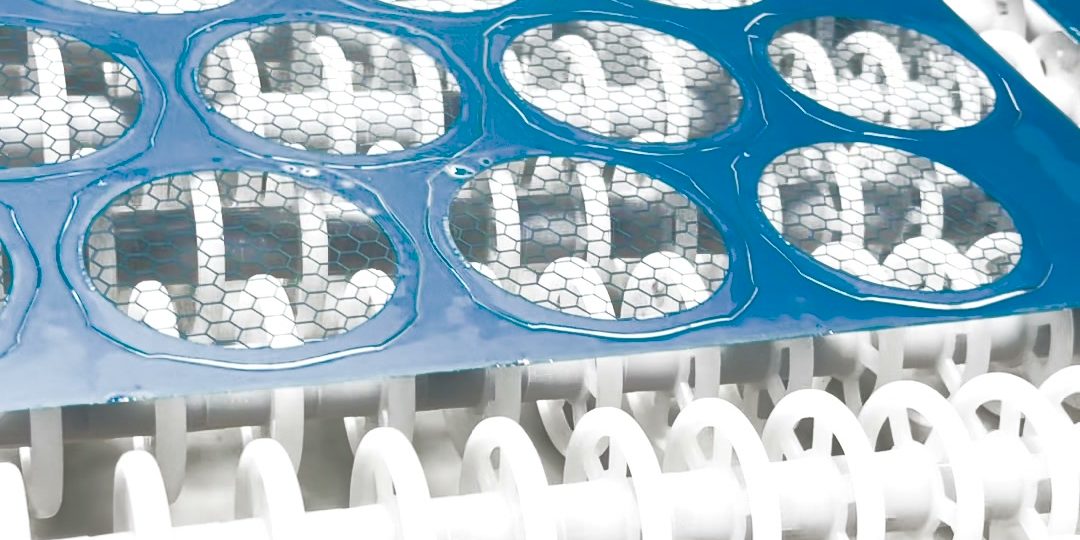
Mesh-pattern panels. A flat panel of fine etched mesh — apertures at the thickness rule, burr-free — is used as a decorative band inlay or a vented panel, and as a functional screen where a sensor window needs a perforated cover. Note the boundary: a full bracelet is formed links and a clasp mechanism, machined and assembled, not etched. The etched contribution is the flat mesh panel; forming it into a curve is outsourced work and must be confirmed at quotation, and a panel that must flex repeatedly is a different engineering question from a panel that sits flat.
What is not etched. The case, the caseback, the crown, the pushers, the clasp, the bracelet links, the movement plates that carry pivots and jewels. Anything with a thread, a blind hole that must hold a screw, a bearing seat or a three-dimensional form is a machined part. Sending us one of those drawings will get a polite no and a referral to the right process — which is better than a yes that ships a part that does not work.
What the drawing must carry
A dial plate or inlay drawing carries five things, and the quotation is only as good as the weakest of them.
- Material and grade. State titanium, and the grade — Grade 2 or Grade 5 for etched parts. If the design names Grade 4, flag it: Grade 4 is the Samsung frame grade, not our standard etched range, and it needs confirmation at quotation rather than an assumption.
- Thickness. This is the functional dimension. Put the nominal thickness and design around ±10% of it. A dial at 0.1 mm carries ±0.01 mm; at 0.2 mm, ±0.02 mm. Do not specify a tolerance tighter than ±10% without asking first — a marker specified at ±0.01 mm on 0.2 mm stock is asking for a tolerance the process does not hold. Our tolerances post works through the ±10% arithmetic; the same numbers govern a dial plate, a shim and a bipolar plate.
- Feature size and pitch. State the smallest through-feature — an index slot, an aperture, a mesh opening — against the thickness rule (0.8–1.2×). A 0.20 mm hole in 0.3 mm stock is a case we declined; the fixes are thinner stock or a larger feature. State the pitch of repeated features with it, because the artwork reproduces the whole pattern at once and the pitch is part of the product, not a note.
- Relief depth. Decorative relief is a half-etch: 50–75% of thickness, ±0.05 mm. State the depth on the drawing next to the thickness, not buried in a note, because the depth is what the eye reads as the pattern.
- Finish and handling. State the finish — passivation in-house, plating outsourced — and any handling requirement: a dial plate is a cosmetic part, and it should be packed as one. A drawing that says nothing about finish will be quoted with the default, and the default may not be the finish the design needs.
One more item matters more for a watch part than for an industrial plate: the part is judged by eye, under glass, at arm’s length and closer. Etching’s advantage here is exactly that the edge is burr-free and the pattern repeats identically from the same artwork — no tool wear, no cutter marks. The same discipline behind our aircraft shims post and our surgical-instrument post applies to a dial plate: thin, precise, and flat, with the tolerance stated rather than assumed.
What etching does — and what it does not do
Photo-chemical etching removes metal chemically, not mechanically, so a thin titanium dial plate comes out flat, stress-free and burr-free, with the same artwork producing the first plate and the ten-thousandth. That repeatability is the case for etching a watch part: a dial whose indices must sit in exactly the same place on every watch cannot absorb a supplier whose dimensions wander. Stamping gets there with a precision die that wears; machining gets there one plate at a time, slowly. Neither failure mode exists in etching, because there is no die and no cutter.
The boundaries are equally plain. Etching makes flat parts — sheets up to 600 × 1,450 mm at 0.5 mm and above — not coil or reel-fed strip, not a case, not a bracelet, not a finished watch. We do not etch aluminium, we do not apply fuel-cell coatings, and we do not build assemblies. Samsung’s 10ATM, IP69K, MIL-STD-810H and 40 m dive figures and Apple’s 50-hour battery figure are those companies’ claims for their finished watches, not ours; our quality documentation is PPAP Level 3, material test certificates and per-run batch numbers. A buyer who needs certified quality documentation should ask for our current documentation at quotation and judge it on its own terms. And a buyer who wants a titanium watch case should talk to a machining or printing house — then send us the dial.
FAQ
Can you etch titanium watch parts?
Yes — flat parts: dial plates, decorative inlays and mesh-pattern panels in 0.05–2.5 mm, Grades 1, 2 and 5. Watch cases, crowns, clasps and bracelet links are not etched parts.
Can you etch a watch case?
No. A case is a thick-walled, three-dimensional part — machined, forged or 3D-printed. Etching makes flat parts from flat sheets only.
How fine can the dial details be?
Through-features floor at roughly the material thickness (0.8–1.2×). On 0.1 mm stock that is roughly a 0.08–0.12 mm feature; on 0.2 mm stock, roughly 0.16–0.24 mm. Finer detail needs thinner stock.
How is the decorative relief made?
As a half-etch: 50–75% of the plate thickness, depth control ±0.05 mm. State the relief depth on the drawing next to the thickness.
Which titanium grade should I specify?
Grade 2 is the usual corrosion-first choice for a dial plate or inlay; Grade 5 where the part carries load. Grade 4 (the Samsung Ultra2 frame grade) is not in our standard etched range — confirm it at quotation.
What do you need on the drawing?
Five items: material and grade, nominal thickness (design around ±10%), smallest feature size and pitch, relief depth, and finish — with any cosmetic handling requirement stated, since a dial plate is judged by eye.

- What Does a 770 W/cm² GPU Hotspot Mean for the Etched Copper Flow Layer? - November 22, 2026
- Photo-Etched Precision Medical Metal Components: Micro-Needles, Lancets and Microfluidic Parts - November 21, 2026
- Custom Lead Frame Etching for IC Packaging: Photo-Etched vs Stamped Lead Frames - November 18, 2026