There is no universal “best” metal for a foldable-display support plate. Titanium is attractive when low weight, high specific strength and thin structural support are priorities. Stainless steel remains valuable when cost, material availability, spring behavior, corrosion resistance or a familiar high-volume supply chain matters more. For a photo-etched part, the final choice should be made from the drawing, not from the material name alone.

Why this comparison matters in foldable displays
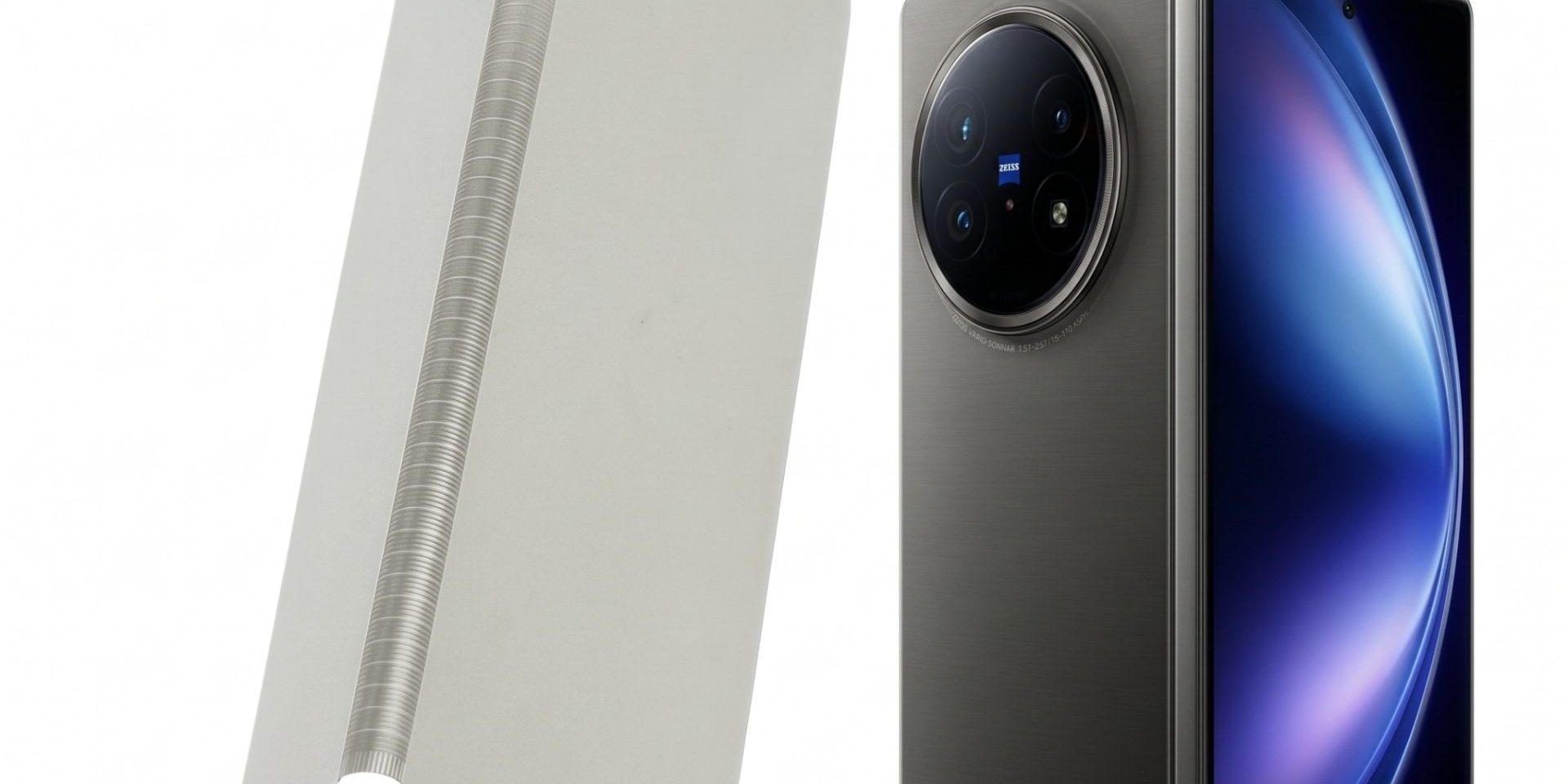
Modern foldable devices are pushing internal structures toward thinner, lighter and more mechanically optimized designs. Samsung publicly introduced its Flex Titanium display structure in 2026, combining a titanium-alloy film with a titanium plate. Samsung also described micro-patterned holes in the folding section of the titanium plate to balance flexibility and durability. Apple likewise states that the iPhone Duo uses Grade 5 titanium and includes a titanium plate beneath the inner display. These examples show why titanium is receiving more attention in premium foldable structures, but they do not mean every flat support component should automatically switch from stainless steel to titanium.
Titanium vs stainless steel: engineering trade-offs
| Decision factor | Titanium | Stainless steel |
|---|---|---|
| Weight-sensitive structures | Strong candidate | Usually heavier for equivalent geometry |
| Specific strength | Often attractive in premium lightweight structures | Strong, widely understood design option |
| Raw-material cost | Typically higher | Usually lower |
| Photo-etching process | Requires titanium-specific chemistry and tighter process control | More established and generally easier to process |
| Prototype iteration | Good fit when the flat geometry suits etching | Good fit and often cost-effective |
| Very high-volume simple geometry | Cost must be reviewed carefully | Often attractive, especially with stamping after design freeze |
How material choice changes the photo-etching DFM
Two drawings with the same dimensions can behave differently if one is titanium and the other is stainless steel. The etchant chemistry, etch rate, sidewall development and dimensional compensation are different. XINKETCHING therefore reviews the exact alloy rather than treating “metal” as one generic material.
- Thickness: minimum opening size, slot width and tolerance expectations should scale with sheet thickness.
- Alloy: Grade 5 titanium, commercially pure titanium and different stainless grades require different process windows.
- Open-area ratio: a plate with thousands of holes behaves differently from a mostly solid plate.
- Pitch and web width: narrow bridges between openings may become the limiting feature before the outside profile does.
- Flatness: thin support plates may require handling, stress-control or post-process planning beyond dimensional tolerance alone.
- Downstream assembly: bonding, forming, passivation, plating or cleaning requirements can change the preferred material.
When titanium is the stronger candidate
Titanium becomes especially interesting when the component is thin and flat, the device is aggressively weight-constrained, and the design needs a combination of structural support and localized flexibility. Micro-patterned plates, perforated reinforcement structures and precision support layers are therefore logical candidates for a titanium DFM study.
For Grade 5 titanium specifically, see XINKETCHING’s Grade 5 titanium etching DFM guide.
When stainless steel may be the better decision
Stainless steel should not be dismissed just because premium foldables increasingly use titanium. It remains a mature engineering material with broad availability and a well-established photo-etching supply chain. If weight reduction does not justify titanium’s extra material and process cost, stainless steel can be the more economical choice for shims, EMI parts, spacers, spring components, perforated plates and support structures.
XINKETCHING already processes multiple stainless-steel grades for thin precision parts. See the stainless steel etching capability page.
A practical material-selection workflow
- Start with the functional target: stiffness, flexibility, weight, shielding, spacing or spring behavior.
- Define the thickness range and critical dimensions.
- Mark the minimum hole, slot and bridge widths.
- Separate “must hold” tolerances from reference dimensions.
- Compare titanium and stainless steel using the same geometry.
- Review both the manufacturing cost and the downstream assembly route.
This avoids a common sourcing mistake: selecting an expensive alloy before confirming that the geometry actually benefits from it.
Compare stiffness and fatigue behavior separately from strength-to-weight ratio. Identify the exact grade and condition, then validate the patterned plate in the intended assembly. A lower mass for the same outline does not establish equal bending behavior or fold life.
Frequently asked questions
Can both titanium and stainless steel be photo etched?
Yes. Both can be photo etched, but they use different process chemistry and design compensation. The exact alloy, thickness and feature geometry must be reviewed separately.
Is titanium always better for a foldable-phone support plate?
No. Titanium can reduce weight and provide excellent specific strength, but stainless steel may offer a better total cost and a simpler supply chain when weight is less critical.
Can I quote both materials from the same drawing?
Yes. This is often a useful early-stage sourcing method. XINKETCHING can review the same geometry in titanium and stainless steel and identify whether any feature should be changed for either material.
Send the drawing before locking the material
For foldable-display support plates, material selection should be tied to geometry and tolerance. Send a DXF, DWG, STEP or dimensioned PDF with material candidates, thickness, quantity and critical tolerances for DFM review.
See the main Foldable Phone Metal Etching capability page for the complete process overview.
Industry references
Brand references describe publicly announced engineering trends only. XINKETCHING does not claim to supply Samsung or Apple unless a customer-approved case study explicitly states otherwise.

- Etching Titanium: When the Weight or the Chemistry Earns It - October 24, 2026
- Etching Copper and Brass: What Changes vs Stainless Steel - October 23, 2026
- Etching Stainless Steel: 304 vs 316L vs 301 for Etched Parts - October 22, 2026