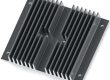
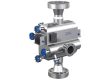
Photochemical etching is used to manufacture thin metal heat-exchanger plates and flow-channel layers when a design requires complex two-dimensional channels, ports, distribution features or repeated fine geometry. The process is especially relevant to plate stacks, microchannel layers and flow-distribution components that are later bonded, brazed, diffusion-bonded or assembled into a complete thermal system.
The etching process does not by itself determine heat-exchanger performance; thermal results depend on channel geometry, material, fluid properties, pressure drop, bonding method and the complete stack design. This guide focuses on the manufacturing role of etched plates and the DFM questions engineers should resolve before production.
Understanding Chemical Etching
A crucial series of processes are involved in the subtractive manufacturing process of chemical etching. Initially, the heat exchanger’s material—such as stainless steel—is carefully cleaned to eliminate any impurities. Next, a photoresist layer is placed on the material’s surface, acting as a mask to protect it during the etching process.
The photoresist layer is then exposed to UV light to transfer a pattern or design onto it, resulting in areas that will be etched away. After that, the material is submerged in an etchant solution, which is usually an alkaline or acidic chemical. This causes the exposed portions to be selectively removed, leaving the desired design in place.
Chemical etching has various benefits when making heat exchangers. Because of its accuracy, complicated geometries and elaborate designs are possible, guaranteeing the best possible heat transfer performance. A large variety of metals and alloys used in the construction of heat exchangers can be accommodated by the technique, which also enables material versatility. Because of these advantages, chemical etching is the method of choice for creating specialized heat exchangers that are exceptionally reliable and efficient.
Advantages of Chemical Etching in Heat Exchanger Manufacture
Precision Engineering: Chemical etching provides unmatched precision when designing heat exchangers. It can produce elaborate heat exchanger systems with exact geometry and complicated patterns that maximize heat transfer efficiency. This accuracy guarantees that every heat exchanger part is precisely made to fulfill performance requirements, improving system performance.
Cost Efficiency
The affordability of chemical etching is one of its main benefits. Chemical etching reduces waste by carefully removing material only from regions designated in the design, in contrast to standard machining procedures that frequently result in significant material waste. Saving money on raw materials and manufacturing processes directly results from this decrease in material waste. Chemical etching also makes it possible for production cycles to be optimized, which lowers lead times and overall production expenses.
Customization
For heat exchanger solutions, chemical etching offers unparalleled customization and flexibility. Designers can produce custom designs with different dimensions, forms, and configurations to satisfy the demands of a given application. The capacity to customize makes it possible to produce heat exchangers that perfectly meet the requirements of various applications and sectors, guaranteeing top functionality and performance.
Material Compatibility
Many materials frequently used in the building of heat exchangers, including titanium, copper, aluminum, stainless steel, and other alloys, can be etched using chemical methods. Thanks to this diversity in material compatibility, manufacturers can select the best material for their heat exchanger design without sacrificing quality or performance.
Scalability
Because chemical etching is scalable, heat exchangers can be produced on a small or big scale. The chemical etching technique is easily adaptable to meet different production volumes while keeping consistent quality and performance across batches, whether generating prototypes or mass-producing heat exchangers. Because of its scalability, firms may effectively fulfill consumer demand and increase or decrease production levels without compromising productivity or quality.


Case Studies and Industry Applications
Examples from the real world demonstrate the observable advantages of chemical etching in the manufacturing of heat exchangers for a variety of industries:
Automotive Industry
To produce vehicle heat exchangers with exact designs and lower costs due to less material waste, Company X used chemical etching. Thanks to this technology, they could maximize manufacturing efficiency and achieve strict performance standards.
HVAC Systems
Company Y used chemical etching for their unique HVAC heat exchanger designs, enabling them to construct intricate geometries for better heat transfer. Chemical etching’s adaptability made it easier to create customized solutions, which improved HVAC system performance.
Aerospace Applications
Company Z complied with strict quality standards and lightweight design criteria by using chemical etching to build heat exchangers for aerospace applications. Heat exchanger integration in aerospace systems has been effective in part because of chemical etching’s accuracy and material diversity.
Industrial Processes
Company W optimized thermal management in manufacturing operations using chemical etching for industrial heat exchangers. Their manufacturing needs were met by the scalability of chemical etching, which guaranteed reliable performance in various industrial applications.
These case studies show how chemical etching improves the manufacturing of heat exchangers in the industrial, HVAC, automotive, and aerospace sectors. Its accuracy, adaptability, and compatibility with various materials make it a top option for businesses looking for economical and practical solutions to thermal engineering problems.


Environmental Sustainability
Chemical etching uses multiple strategies to support environmental sustainability. Compared to conventional machining techniques, it produces less waste since it removes material selectively, lessening its environmental impact. The process can also be tuned for energy efficiency to reduce its carbon footprint further. Chemical etching manufacturers also take environmental rules seriously, ensuring that waste disposal and emissions criteria are met. Chemical etching in the manufacture of heat exchangers has an environmentally friendly profile thanks to sustainable manufacturing techniques like recycling process chemicals and using eco-friendly etchants.
Challenges and Solutions
Managing the complexities of the process and handling dangerous chemicals are challenges in chemical etching. Companies prioritize strict safety procedures, such as appropriate training for handling chemicals and the use of protective equipment, to address issues. Automation and sophisticated control systems handle process complexity, lowering human error and guaranteeing consistent outcomes. Strict inspection protocols, process monitoring, and routine equipment maintenance contribute to quality control. By implementing these fixes and best practices, chemical etching procedures may be made safe, effective, and of the highest caliber, reducing risks and preserving product integrity during the heat exchanger manufacturing process.
Conclusion
Photochemical etching is a manufacturing method for the thin patterned plates and channel layers used in certain heat-exchanger and thermal-management architectures. It should not be selected solely on the basis of “precision”; manufacturability depends on plate material, thickness, channel geometry, etch depth, pressure requirements, bonding method and the complete stack design.
For related engineering guidance, see Etched Heat Sinks & Thermal Plates and Photochemical Etching for Design Engineers. For a DFM review, provide the plate drawing, material, thickness, channel geometry, bonding plan and critical dimensions.

- Etching Titanium: When the Weight or the Chemistry Earns It - October 24, 2026
- Etching Copper and Brass: What Changes vs Stainless Steel - October 23, 2026
- Etching Stainless Steel: 304 vs 316L vs 301 for Etched Parts - October 22, 2026