Metal Etching: Techniques, Processes, and Key Applications
Metal etching is a process that removes material from metal surfaces to create designs, patterns, or precise cuts. This technique uses chemicals or other methods to selectively eat away at unprotected areas of metal, leaving behind your desired design or shape. You can use metal etching for both artistic purposes like jewelry and decorative items, and for practical applications like creating circuit boards or manufacturing thin metal parts.
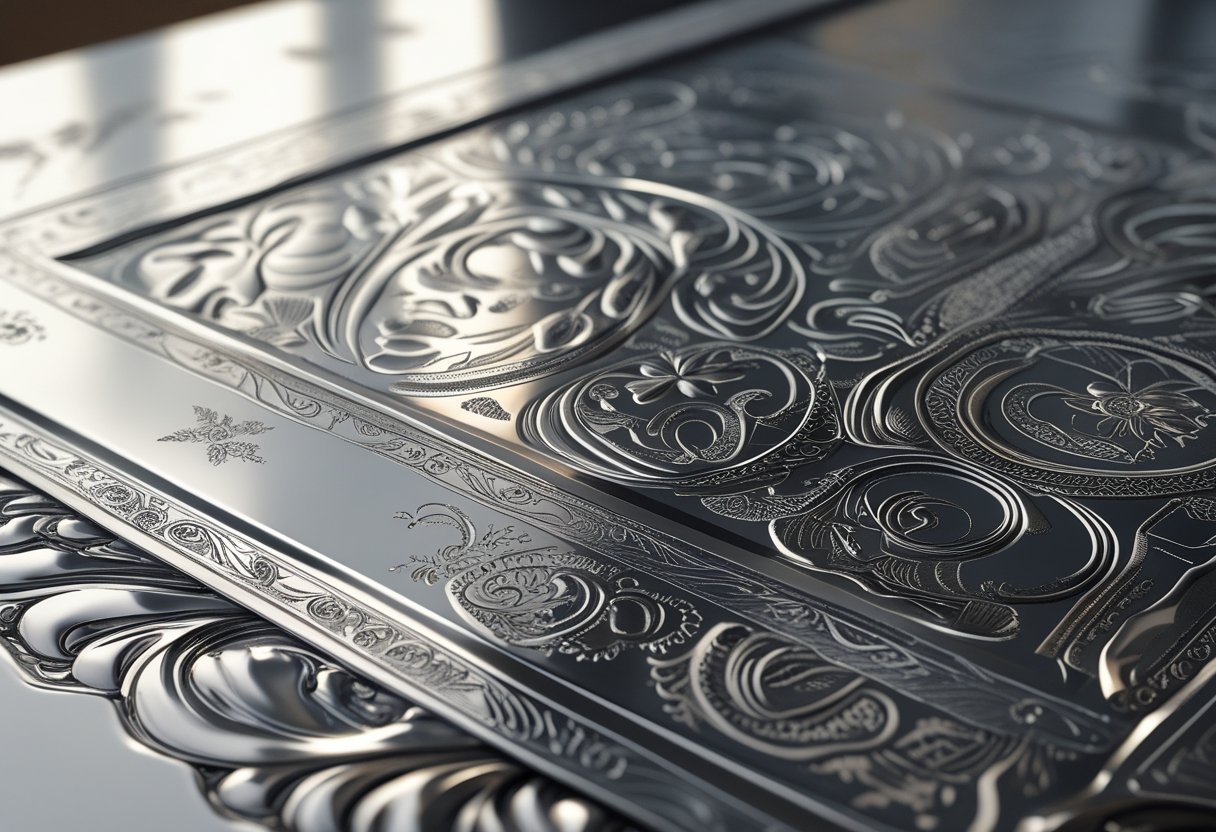
The process has been around for thousands of years. Early civilizations used etching to decorate weapons, armor, and jewelry. Today, you can etch many types of metals including copper, steel, aluminum, brass, and zinc. Modern metal etching combines traditional methods with new technology to achieve results that range from simple designs to highly detailed patterns.
Whether you want to create custom art, mark metal products, or manufacture precision parts, metal etching offers you a reliable way to work with metal. The technique works for both small hobby projects and large industrial operations. Understanding how metal etching works will help you choose the right method and materials for your specific needs.
Key Takeaways
- Metal etching removes material from metal surfaces using chemicals or other methods to create designs and shapes
- You can use several etching techniques including chemical acid etching, laser etching, and electrochemical etching depending on your project needs
- Metal etching works for both decorative purposes like jewelry and functional applications like circuit boards and industrial parts
Understanding Metal Etching
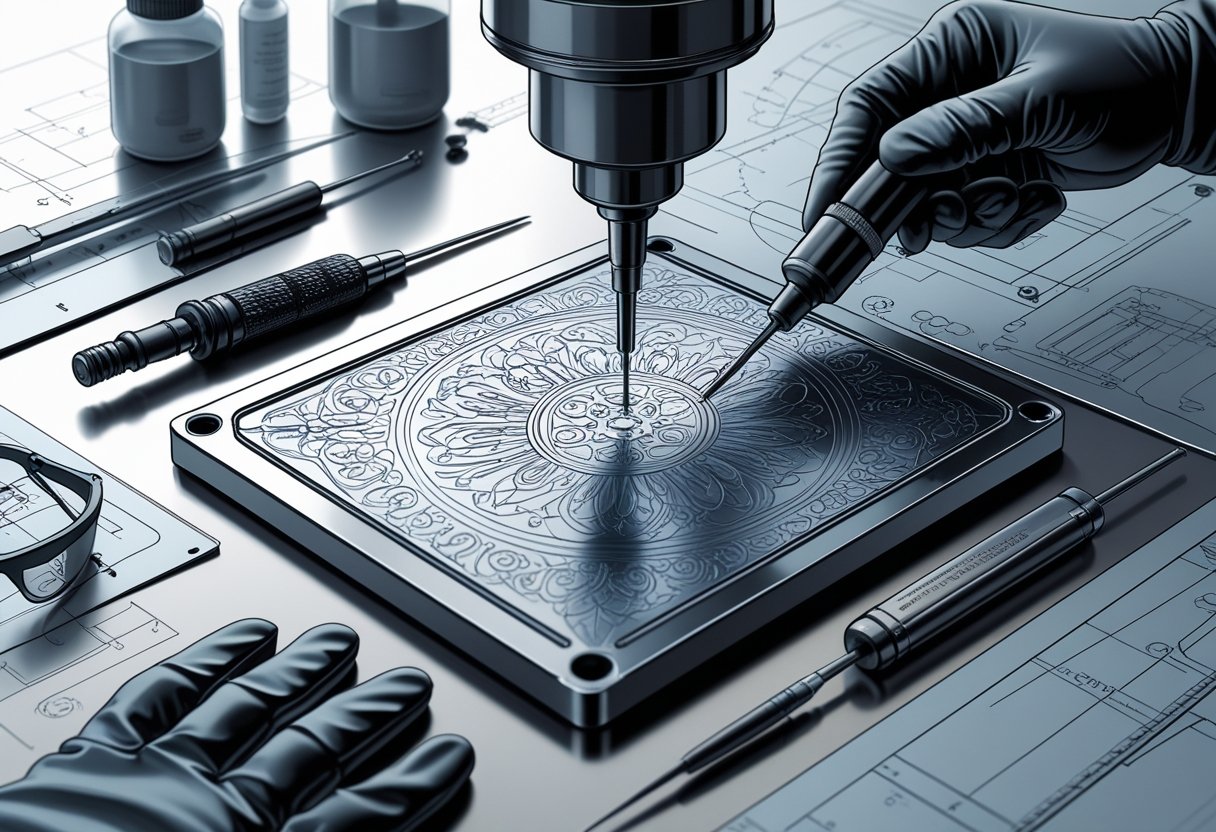
Metal etching removes material from metal surfaces using chemical reactions or other controlled processes to create precise patterns, designs, and functional parts. This process works on various metals and serves industries from electronics to aerospace manufacturing.
What Is Metal Etching
Metal etching is a metal removal process that shapes complex and accurate components by selectively removing material from a workpiece. You can use this technique to create parts with thicknesses ranging from 0.0005 inches to 0.05 inches. The process applies minimal force or heat, which means your metal keeps its original properties and remains free from stress or warping.
Unlike traditional machining methods, etching doesn’t rely on cutting tools that wear down over time. You can make instant changes during processing, giving you flexibility in production. The technique works particularly well when you need to produce small, intricate parts at low cost.
Brief History of Metal Etching
Metal etching has existed for hundreds of years. People originally developed this technique to make weapons, household tools, and jewelry by hand. Craftsmen would apply protective coatings to metal surfaces, carve designs into the coating, then use acids to eat away exposed metal areas.
The modern era transformed etching into a precision manufacturing process. Today’s etching methods produce critical components for aircraft, automobiles, satellites, and electronic devices. The shift from artistic craft to industrial process brought computer-aided design, automated equipment, and strict quality controls that deliver consistent results.
How Metal Etching Works
The etching process starts with thorough cleaning to remove any oil, contaminants, or particles from your metal surface. You then apply a protective coating called a maskant to areas you want to preserve. This maskant contains materials like isobutylene isoprene copolymers that resist chemical reactions.
Next, you create your desired pattern by either carving through the maskant or applying it in specific shapes. The exposed metal areas are then treated with an etchant, typically ferric chloride for most metals or cupric chloride for copper. You can apply the etchant by spraying it onto your workpiece or immersing the piece in an acid bath.
The etchant dissolves only the exposed metal areas while the maskant protects the rest. Different metals require different etching times—softer metals like copper and bronze etch faster than harder metals like nickel and steel. After etching reaches the desired depth, you wash away both the maskant and etchant to reveal your finished part.
Types of Metal Etching
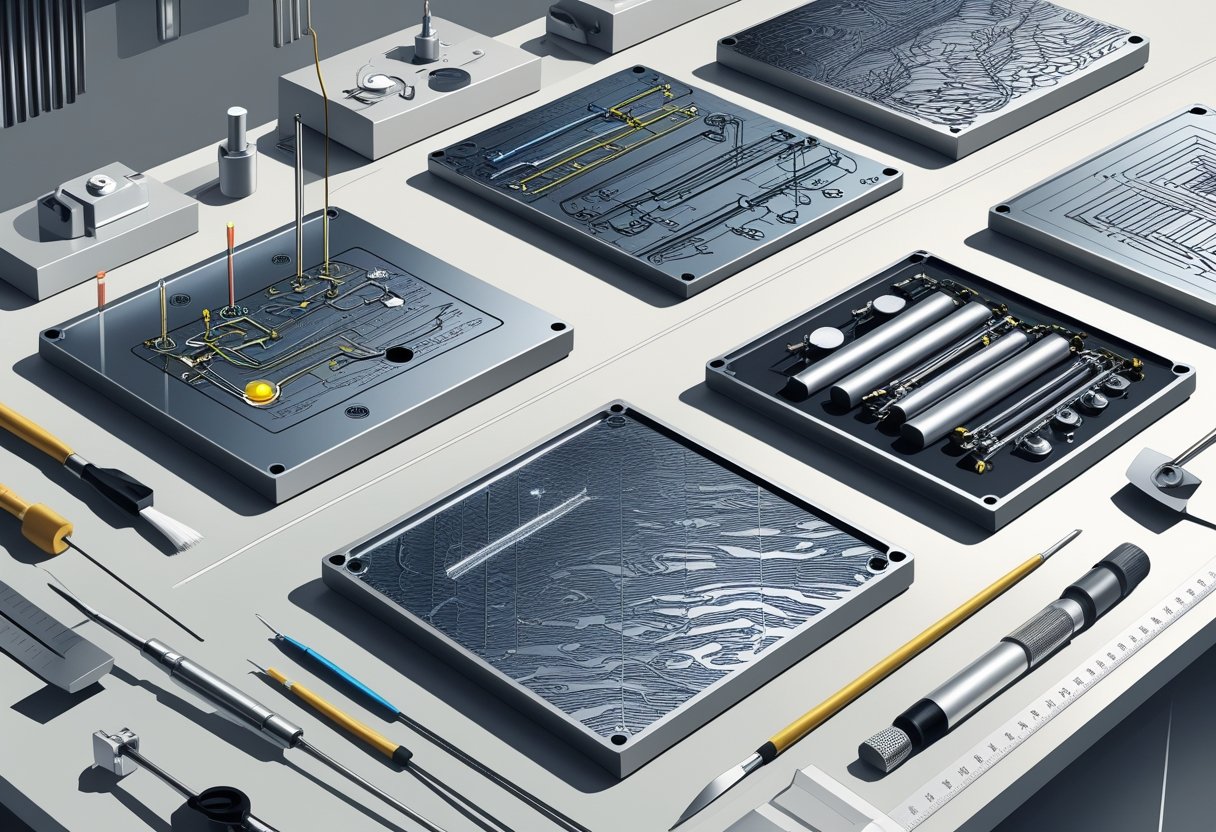
Metal etching uses different methods to remove material from a metal surface and create designs or patterns. Each method relies on distinct processes—chemicals, electricity, lasers, or physical tools—and works best for specific applications and materials.
Chemical Etching
Chemical etching uses acids or other corrosive solutions to dissolve exposed areas of metal. You apply a protective resist material to areas you want to preserve, then immerse the metal in an etchant bath. The chemical solution eats away at the unprotected metal, creating your design.
Common etchants include ferric chloride for copper and brass, nitric acid for steel, and sodium hydroxide for aluminum. The depth and quality of the etch depends on solution strength, temperature, and immersion time.
This method excels at producing complex patterns across large surface areas. You can achieve tolerances as precise as 0.001 inches on thin materials. Chemical etching creates no heat-affected zones or mechanical stress, which keeps the metal’s properties intact.
The process generates chemical waste that requires proper disposal. You need adequate ventilation and protective equipment when working with corrosive solutions.
Electrochemical Etching
Electrochemical etching removes metal through an electrical current passing between the workpiece and an electrolyte solution. You connect your metal to a power source and apply a resist to protect certain areas. The electric current causes metal ions to dissolve from exposed surfaces into the electrolyte.
This method offers precise control over etch depth through voltage and current adjustments. It works well on stainless steel, aluminum, and titanium. The process produces cleaner edges than chemical etching alone and generates less hazardous waste.
You can mark metals in seconds rather than minutes with electrochemical methods. The technique requires conductive materials and basic electrical equipment. It creates permanent marks that resist wear and corrosion.
Laser Etching
Laser etching uses a focused beam of light to vaporize or discolor the metal surface. A computer-controlled laser follows your design pattern with extreme accuracy. The process creates marks through material removal, oxidation, or surface melting depending on laser settings.
Fiber lasers work best for metals like steel, aluminum, and brass. CO2 lasers handle some coated metals but are less effective on bare metal surfaces. UV lasers provide the finest detail on reflective materials.
You can achieve marking speeds up to 7000 millimeters per second with modern systems. Laser etching produces marks with 0.01 millimeter precision and requires no consumable chemicals. The non-contact process eliminates tool wear and mechanical stress on parts.
Setup costs run higher than manual methods, but automation reduces labor time significantly. This method suits high-volume production and materials that react poorly to chemicals.
Mechanical Etching
Mechanical etching physically removes metal through abrasion or impact. Common techniques include sandblasting, engraving with rotary tools, and stamping. You use hard particles or cutting tools to wear away the metal surface in specific patterns.
Sandblasting propels abrasive media against masked metal to create texture or designs. Rotary engraving uses spinning carbide or diamond bits to cut into the surface. These methods work on virtually any metal hardness.
The process creates visible depth and texture that you can feel. It handles thick materials better than chemical methods and requires minimal specialized equipment. Mechanical methods produce dust and noise, requiring proper safety measures and ventilation.
Essential Materials and Equipment
Metal etching requires specific materials and tools to create clean, precise designs. The right metal, chemical solutions, safety equipment, and specialized tools all play important roles in achieving professional results.
Choosing the Right Metal
Copper, brass, and nickel silver are the best metals for beginners. These materials etch quickly and predictably with common chemical solutions.
Copper produces deep, even etches and works well with ferric chloride. It’s widely available and affordable for practice projects.
Brass creates beautiful contrast when etched. It requires a mixture of hydrochloric acid and nitrates for optimal results.
Stainless steel needs stronger acids like hydrochloric or sulfuric acid. This metal takes longer to etch but offers excellent durability for industrial applications.
Aluminum etches well but requires specific solutions designed for this metal. Standard copper etchants won’t work effectively on aluminum surfaces.
The thickness of your metal matters too. Thinner sheets between 0.5mm and 1.5mm etch faster and are easier to work with for detailed designs.
Etchants and Resists
Ferric chloride is the most common etchant for copper and brass. You can purchase it premade or mix your own solution following safety guidelines.
Nitric acid works for copper-based alloys and creates faster etching times. This solution requires careful handling and proper ventilation.
For a safer option, you can make a basic etchant using white vinegar and salt. This mixture works slowly but avoids harsh industrial chemicals.
Common Etchant Options:
- Ferric chloride: Copper, brass, bronze
- Nitric acid: Copper alloys
- Hydrochloric acid: Stainless steel
- Vinegar and salt: Copper (slow process)
Resists protect areas you don’t want etched. Permanent markers work for simple projects and hand-drawn designs.
Acid-resistant paint provides better coverage for ferrous metals like iron and steel. Apply it in thin, even coats to prevent gaps.
Vinyl stickers and tape create clean edges for geometric patterns. These materials peel off easily after etching is complete.
Photosensitive resist film allows you to transfer detailed images onto metal. This method requires UV exposure equipment but produces the most precise results.
Protective Gear
Safety gear protects you from dangerous chemicals and fumes. Never start an etching project without proper protection.
Chemical-resistant gloves prevent acid burns on your hands. Nitrile gloves work better than latex because they resist most etching solutions.
Safety goggles or a face shield protect your eyes from splashes. Acid can cause serious eye damage within seconds of contact.
A respirator mask filters harmful fumes released during the etching process. Standard dust masks don’t provide enough protection from chemical vapors.
Wear long sleeves and pants made from thick fabric. An apron adds another layer of protection against accidental spills.
Work in a well-ventilated area or outdoors. Open windows and use fans to keep fresh air circulating around your workspace.
Specialized Tools
A non-metallic container holds your etching solution safely. Glass or plastic basins work well and won’t react with acids.
Soft cloths and cleaning solutions remove oils and dirt from metal before etching. Clean surfaces ensure the resist adheres properly and creates sharp designs.
Brushes apply resist materials evenly across the metal surface. Use synthetic bristles that won’t break down when exposed to chemicals.
Sandpaper and files smooth rough edges after etching is complete. Start with coarse-grit paper and progress to finer grits for a polished finish.
A laser engraver or UV exposure box helps transfer complex designs onto photosensitive resist. These tools cost more but expand your creative options significantly.
Step-By-Step Metal Etching Process
Metal etching requires careful preparation, precise design application, controlled chemical exposure, and thorough finishing to achieve clean, accurate results. Each stage plays a critical role in producing quality etched components.
Surface Preparation
You need to start with a completely clean metal surface. Any oils, dirt, grease, or contaminants will prevent the resist from adhering properly and ruin your final piece.
Use a degreasing agent or chemical cleaner to remove all residues from the metal. Common cleaning methods include washing with acetone, using specialized metal degreasers, or applying an alkaline cleaning solution. After cleaning, avoid touching the metal surface with bare hands since skin oils will contaminate it.
Dry the metal thoroughly before moving to the next step. Some metals benefit from light sanding with fine-grit sandpaper to create better adhesion for the resist coating. Stainless steel, copper, brass, and aluminum are popular choices for etching, with typical thicknesses ranging from 0.010 mm to 2.5 mm.
Applying the Design
The photoresist layer protects the areas of metal you want to keep. You apply this UV-sensitive coating evenly across the cleaned metal sheet through a lamination process.
Position your design stencil or photo tool over the coated metal. The stencil contains your pattern in areas that allow UV light to pass through. Expose the metal to UV light through this stencil, which hardens the photoresist in the exposed areas.
Develop the sheet by removing the unexposed photoresist with a developing solution. This leaves bare metal in the areas you want to etch away and protected metal where the hardened resist remains. Check that all unwanted resist has been removed and that the protected areas show no gaps or damage.
Etching the Metal
Ferric chloride is the most common etchant for metal etching. You spray or immerse the prepared metal sheet in this chemical solution, which dissolves the exposed areas of metal.
The etching time depends on several factors:
- Metal type and grade
- Sheet thickness
- Temperature of the etchant
- Concentration of the solution
For spray etching, heated ferric chloride is applied at high pressure to both sides of the metal. This method provides faster, more uniform results than immersion etching. Monitor the process carefully to achieve the desired depth without over-etching.
Thinner metals etch faster than thick sheets. You typically need 15 to 45 minutes for most projects, but complex designs may require adjustments.
Post-Etching Cleaning and Finishing
Remove all remaining photoresist from the metal using a stripping solution. This reveals your final etched pattern and removes any protective coating left on the surface.
Rinse the metal thoroughly with water to eliminate all chemical residues. Inspect the piece for dimensional accuracy and surface quality using optical equipment or careful visual examination.
You can apply additional finishing processes based on your needs. Options include electropolishing for a smoother surface, passivation for corrosion resistance, or plating for enhanced durability and appearance. Some projects require heat treatment, forming, or other secondary operations to complete the component.
Advantages and Limitations of Metal Etching
Metal etching offers exceptional precision and material efficiency while keeping costs manageable, but the process requires careful control to avoid technical issues and safety concerns.
Precision and Tolerances
Metal etching produces parts with extremely tight tolerances, often reaching ±0.025mm or better depending on the method and material. This level of accuracy makes it ideal when you need intricate patterns, fine details, or complex geometries that would be difficult or impossible with mechanical cutting methods.
Photochemical etching and plasma etching deliver the highest precision among etching techniques. These methods create sharp edges and maintain dimensional accuracy across your entire part, even when working with thin materials. You can achieve feature sizes as small as 0.1mm without concerns about tool wear affecting quality over time.
The process maintains consistent dimensions throughout production runs because it doesn’t involve physical contact with your workpiece. Unlike drilling or milling, there’s no mechanical stress that could deform thin sections or delicate features. This makes etching particularly valuable when you’re producing electronic components, medical devices, or aerospace parts where precision directly impacts performance.
Material Preservation
Etching removes material without generating heat or physical stress, which preserves your metal’s original properties. The base material retains its strength, hardness, and metallurgical characteristics because the process doesn’t alter the crystal structure or introduce work-hardening effects.
You won’t face burrs, warping, or edge distortion that commonly occur with mechanical cutting methods. This is especially important when working with thin sheets under 0.5mm thick, where traditional machining would cause unacceptable deformation. The lack of physical force means you can etch delicate patterns without damaging surrounding areas.
Chemical and photochemical etching work equally well on hard, brittle, or difficult-to-machine metals. You can process materials like hardened steel, titanium, or specialty alloys without the tool wear problems that plague conventional machining. The process also creates stress-free parts that won’t distort later during assembly or use.
Production Cost and Speed
Metal etching offers cost advantages for specific production scenarios. You don’t need expensive custom tooling for each design, which makes it economical when producing prototypes or small batches. Design changes only require new photographic masks or stencils rather than retooled dies or machining programs.
The process becomes increasingly cost-effective as part complexity increases. While simple shapes might be cheaper to stamp or cut mechanically, etching maintains consistent costs regardless of pattern intricacy. You pay the same whether etching a simple circle or an elaborate design with hundreds of fine features.
Chemical etching generally costs less than laser etching for materials that respond well to chemical solutions. However, you’ll face higher operational costs if you need specialized chemicals or extended processing times for hard metals like stainless steel or nickel alloys. Processing speed varies significantly by method and material thickness, with electrolytic etching marking surfaces in 2-3 seconds while deep chemical etching may require hours.
Potential Challenges
Edge effects present a persistent challenge where etching removes more material at pattern edges than at centers. This undercutting creates tapered profiles rather than perfectly vertical walls, which can affect dimensional accuracy when you need precise edge definitions. You’ll need to compensate for this during design or carefully control etchant flow and temperature.
Chemical handling requirements add complexity and cost to your operations. Strong acids and bases demand proper ventilation systems, protective equipment, and waste disposal procedures that meet environmental regulations. Your facility needs appropriate storage areas and spill containment measures to maintain workplace safety.
Etchant degradation affects consistency over time as solutions lose strength through repeated use or chemical reactions. You must monitor parameters like pH and concentration regularly, adding fresh chemicals or replacing depleted solutions to maintain stable etching rates. This ongoing maintenance increases operational costs and requires trained personnel.
Residue buildup from incomplete etching can compromise your finished parts, particularly in electronics applications where conductivity matters. Material redeposition in plasma etching chambers reduces efficiency and requires regular cleaning cycles. Surface finish quality varies depending on your chosen method and process control, sometimes necessitating additional finishing steps to achieve your desired appearance or smoothness.
Applications and Uses of Metal Etching
Metal etching creates precise parts for critical industries and artistic projects alike. This process produces everything from microscopic electronic components to decorative artwork, offering accuracy that traditional machining cannot match.
Industrial Manufacturing
You’ll find metal etching throughout industrial manufacturing where precision and repeatability matter most. The aerospace industry uses etched components for aircraft and satellites because the process maintains material integrity without introducing stress or deformation. Parts with thicknesses from 0.0005 inches to 0.05 inches work especially well with this method.
Chemical processing equipment relies on etched stainless steel and nickel components for their corrosion resistance. The automotive sector uses etched parts for fuel cell components, sensors, and intricate brackets where weight reduction is essential.
Metal etching produces functional parts like filters, stencils, shims, and nameplates with complex geometries. You can create intricate shapes that would be difficult or impossible with stamping or machining. The process handles high-volume production runs while maintaining tight tolerances across thousands of identical parts.
Medical device manufacturers choose metal etching for surgical instruments and implants because it preserves biocompatibility. The low mechanical stress during etching keeps the metal’s properties intact, which is critical for parts that must meet strict safety standards.
Electronics and PCBs
Printed circuit boards depend on metal etching to create the conductive pathways that connect electronic components. Copper etches rapidly and cleanly, making it the standard choice for PCB manufacturing. You can achieve fine line widths down to microns, allowing for high-density circuit designs in smartphones, computers, and other devices.
The electronics industry uses photochemical etching to produce EMI/RFI shielding, electrical contacts, and lead frames. These components require exact specifications because even minor variations affect performance. The process delivers burr-free edges and maintains dimensional accuracy across large production batches.
Microelectromechanical systems (MEMS) rely on etching for sensors, accelerometers, and micro-scale features. You can create delicate structures without the force or heat that would damage such small components. The non-contact nature of chemical etching protects thin materials during processing.
Jewelry and Decorative Art
Metal etching adds intricate designs to jewelry, signage, and decorative metalwork. Artists use acid etching to create recessed patterns in copper, bronze, and precious metals. The technique allows you to reproduce complex artwork with fine detail that engraving tools cannot achieve.
You can etch custom logos, serial numbers, and decorative elements onto metal surfaces for personalization. Laser etching offers a chemical-free option for marking jewelry with names, dates, or patterns. This method changes the metal’s surface reflectivity or color without removing significant material.
Bronze and copper respond well to acid etching for musical instruments, architectural elements, and craft projects. The process gives you control over depth and texture for both functional and purely aesthetic applications.
Prototyping and Custom Parts
Rapid prototyping benefits from metal etching because you can make design changes quickly without retooling. CAD software lets you adjust patterns digitally and produce new phototools within hours. This speed reduces development time compared to creating machining fixtures or stamping dies.
Small production runs become cost-effective with etching. You don’t need expensive tooling for short batches, making it practical for custom parts, limited editions, or testing new designs. The process works well for parts ranging from simple brackets to complex mesh patterns.
Engineers use etching to test different configurations before committing to large-scale manufacturing. You can produce functional prototypes in the actual material rather than substitutes, giving you accurate performance data. The ability to create multiple design iterations rapidly accelerates product development cycles.
Frequently Asked Questions
Metal etching requires specific knowledge about compatible materials, safety protocols, and precision techniques. Understanding chemical disposal regulations and depth control methods helps ensure successful results while protecting both workers and the environment.
What types of metals can be effectively etched?
Stainless steel is the most commonly etched metal due to its versatility and numerous available grades. You can etch various stainless steel types, including AISI 301, AISI 316L, and AISI 304. These contain chromium that provides corrosion resistance while still responding well to etching processes.
Beyond stainless steel, you can successfully etch copper, nickel, and aluminum. Steel varieties including ferritic, martensitic, and duplex steels work well with etching techniques. Titanium and its alloys are particularly suitable for electrochemical etching despite being difficult to machine through traditional methods.
What are the different methods used for metal etching?
Chemical etching uses acids or other corrosive solutions to remove material from metal surfaces. This method works by selectively dissolving exposed areas while protecting masked sections. You apply photoresist or similar materials to create the pattern before introducing the chemical solution.
Electrochemical etching uses electrical current combined with chemical solutions to remove metal. This process offers better control over hard-to-machine metals and highly corrosion-resistant materials. Laser etching provides another option by using focused light energy to vaporize or melt away material without chemicals.
How does one safely handle chemicals used in the etching process?
You must wear appropriate personal protective equipment including chemical-resistant gloves, safety goggles, and protective clothing. Work in a well-ventilated area or use a fume hood to prevent inhaling harmful vapors. Keep emergency eyewash stations and safety showers accessible in your work area.
Store etching chemicals in properly labeled, sealed containers away from incompatible materials. Never mix different chemicals unless specified by the process requirements. You should have material safety data sheets readily available for all chemicals you use.
What are the best practices for achieving high-precision in etching designs?
Standard minimum etching tolerances reach ±10% of the metal thickness being etched, with a minimum of ±0.025 mm. You achieve the best accuracy by using high-quality photoresist masks and ensuring proper exposure times. Clean metal surfaces thoroughly before applying resist to prevent defects.
Control your etching solution temperature and concentration carefully throughout the process. Fresh etchant produces more consistent results than depleted solutions. Photo-chemical etching eliminates burrs and recast layers that other processes leave behind, which helps maintain precision in safety-critical applications.
Can etching depth be controlled, and if so, how?
You control etching depth primarily through exposure time to the etching solution. Longer exposure times create deeper etches, while shorter times produce shallow results. Monitor the process regularly to achieve your desired depth.
Metal thickness affects etching time significantly. Thicker materials require longer etching periods, which makes metals above 1.5mm uneconomical to process using chemical methods. You can test small samples first to determine the exact timing needed for your specific depth requirements.
What are the environmental considerations when disposing of etching chemicals?
You must follow local and federal regulations for hazardous waste disposal. Spent etching solutions often contain dissolved metals and corrosive chemicals that require special handling. Never pour etching chemicals down standard drains or dispose of them with regular trash.
Contact licensed hazardous waste disposal companies to remove spent chemicals from your facility. Some etching solutions can be neutralized before disposal, but you need to verify this with environmental regulations in your area. Keep detailed records of all chemical waste disposal to maintain compliance with environmental laws.

- Everything You Need To Know About Metal Etching - February 7, 2026
- Understanding Etching in Art and Metalwork - December 23, 2025
- Is Etching Cheaper Than Engraving? - November 28, 2025